Blog

  • NAVEE NT5 Ultra X

    NAVEE NT5 Ultra X

    The NAVEE NT5 Ultra X is one of the most planted-feeling scooters in the 40 mph class, and its trailing-arm front end genuinely changes how fast the machine feels underneath you. Independent testing confirms 39 mph on GPS against the claimed 40, with dual 800W motors and an 898Wh pack. At the $1,999.99 list price the spec sheet loses to cheaper rivals, so the buying case rests almost entirely on catching it at street prices near $1,299 to $1,699.

    Who it’s for

    This scooter suits the fast commuter who values composure over headline numbers. Riders who spend their miles on rough city pavement, bike lanes and light hardpack will get more out of the NT5 Ultra X than riders chasing acceleration records. The 80.4-pound curb weight puts it firmly in the “carry it up one flight of stairs, reluctantly” category, so plan on ground-floor or garage storage.

    Look elsewhere if you need fast turnarounds between rides, since the standard charge takes about eight hours. Look elsewhere if you ride at night in traffic that expects turn signals, or if you want hydraulic brakes as a matter of principle at these speeds.

    Key specs

    Spec NAVEE NT5 Ultra X
    US retail price $1,999.99 list, commonly $1,299.99 to $1,699 street
    Motors Dual 800W rated, 1,200W peak each
    Top speed 40 mph claimed, 39 mph GPS-verified
    Battery 46.8V 19.2Ah, 898.56Wh
    Range 55.9 mi at 9.3 mph, 28 mi at 24.9 mph claimed
    Weight and load 80.5 lbs net, 330 lb max load
    Brakes and suspension Dual 140mm mechanical disc plus EABS, ~40mm travel front and rear
    Charging and sealing 8 ±1 h standard, 2 h flash charge, IPX6

    Living with it

    Stability is the headline. Testers at Electric Scooter Guide and RiderGuide both singled out the trailing-arm front end, with RiderGuide’s crew reporting they consistently underestimated their own speed by roughly 10 mph because 35 to 40 mph felt like 20. That composure is a safety feature at these velocities. The trade-off shows up in corners, where steering feel goes slightly muted compared with a conventional fork.

    The brakes surprised reviewers. Mechanical discs on a 40 mph scooter usually invite criticism, and RiderGuide instead called these “probably the best-tuned mechanical brakes we’ve ever tested,” requiring light finger pressure with balanced front-to-rear bias. Cable brakes still need periodic adjustment as pads wear, which hydraulics do not, so factor that into your maintenance rhythm.

    Acceleration measures 1.79 seconds to 10 mph, 4.47 seconds to 20 mph and 9.52 seconds to 30 mph. Those are respectable numbers rather than category-leading ones, and motor temperatures stayed controlled under sustained load in testing. Suspension travel of roughly 40mm handles potholes and gravel, though riders above 200 pounds risk bottoming out on aggressive terrain.

    Three complaints come up repeatedly across independent reviews: the display washes out in daylight, there are no rear turn signals, and the scooter ships without a horn. Range is the fourth. Aggregated real-world figures land near 40 to 47 miles against the 55.9-mile claim, which is normal for the category but worth planning around. The software side is stronger, with proximity unlock, over-the-air updates, traction control and subscription-free Apple Find My integration.

    Cost of ownership

    NAVEE lists $1,999.99 and sells at $1,299.99 during promotions, with retail trackers showing an average street price near $1,780. That spread of $700 is the single biggest variable in whether this scooter makes sense. At $1,299 it is a strong buy. At $1,999 it competes against machines with more range and more speed for less money.

    The warranty covers motor, hub and frame for 24 months, which is standard for the segment and better than the 12 months some direct-to-consumer brands offer. Budget for consumables: brake pads and cables on a mechanical system need attention every few hundred miles of hard riding, and 10.5-inch tubeless tires run roughly $40 to $70 each. The 898Wh pack costs a few cents per full charge and should hold usable capacity for several hundred cycles.

    Charging deserves a line in your budget too. Eight hours on the standard charger means one full ride per day. The 2-hour flash-charge capability solves that, so price the fast charger into the purchase if you plan two commutes on one battery.

    How it compares

    The NAVEE UT5 Ultra X sits directly above it at $2,499.99 and answers most of the NT5’s complaints. Dual 1,200W rated motors, a 1,284Wh pack, 12-inch self-healing tubeless tires, full hydraulic suspension with an adjustable rear, hydraulic disc brakes and a roughly 6-hour charge. GPS-verified top speed reaches 42.9 mph against a 43 mph claim. It weighs 90.4 pounds. If the eight-hour charge or the mechanical brakes bother you, the $500 to $800 step up buys the fix outright.

    From Segway, the ZT3 Pro sells around $999 with a 24.9 mph top speed and 43.5 miles of claimed range, giving up 15 mph but bringing Find My, AirLock and dealer-network support at roughly half the price. Trackers list the Segway MAX G3 at $799 and the MAX G3 Plus at $1,149 as strong value alternatives.

    The Apollo Phantom 2.0 is the performance answer. Dual 1,750W motors, a 1.4kWh battery, 43 mph, dual spring suspension and UL2271/UL2272 certification with IP66 sealing, listing at $2,999 and discounting toward $2,099. It costs meaningfully more and returns meaningfully more power. The NT5 Ultra X counters with lower weight, since at 80.5 pounds it comes in roughly 17 pounds under the performance-category average.

    FAQ

    Does it really hit 40 mph?

    Close. Independent GPS testing recorded 39 mph, with the dashboard reading about 2 mph optimistic. Expect the top of that range only on a fresh charge, flat ground and a lighter rider.

    How far will it actually go?

    NAVEE claims 55.9 miles at a 9.3 mph crawl and 28 miles at 24.9 mph. Real-world aggregated figures cluster around 40 to 47 miles of mixed riding. Cold weather, hills and rider weight cut that further.

    Are mechanical brakes safe at these speeds?

    On this specific scooter, reviewers rated the tuning as class-leading, with 140mm rotors and EABS regeneration sharing the work. Cables stretch and pads wear, so inspect and adjust them regularly. Riders who want set-and-forget stopping power should step up to the UT5 Ultra X and its hydraulic system.

    Bottom line

    The NT5 Ultra X is a genuinely well-sorted machine wrapped around one difficult pricing question. Its stability at speed, brake feel and software package all exceed what the raw specs suggest, and the 24-month warranty on drivetrain and frame is reassuring. Against that sit the eight-hour charge, the missing turn signals and horn, the daylight-illegible display and a 39 mph top speed that trails category averages. At $1,999 the value case does not hold up next to a Segway MAX G3 Plus or a UT5 Ultra X. Wait for it near $1,299 to $1,499, and it becomes one of the more confidence-inspiring fast commuters you can buy.
  • Inspired Overland Carbonlite-X

    Inspired Overland Carbonlite-X

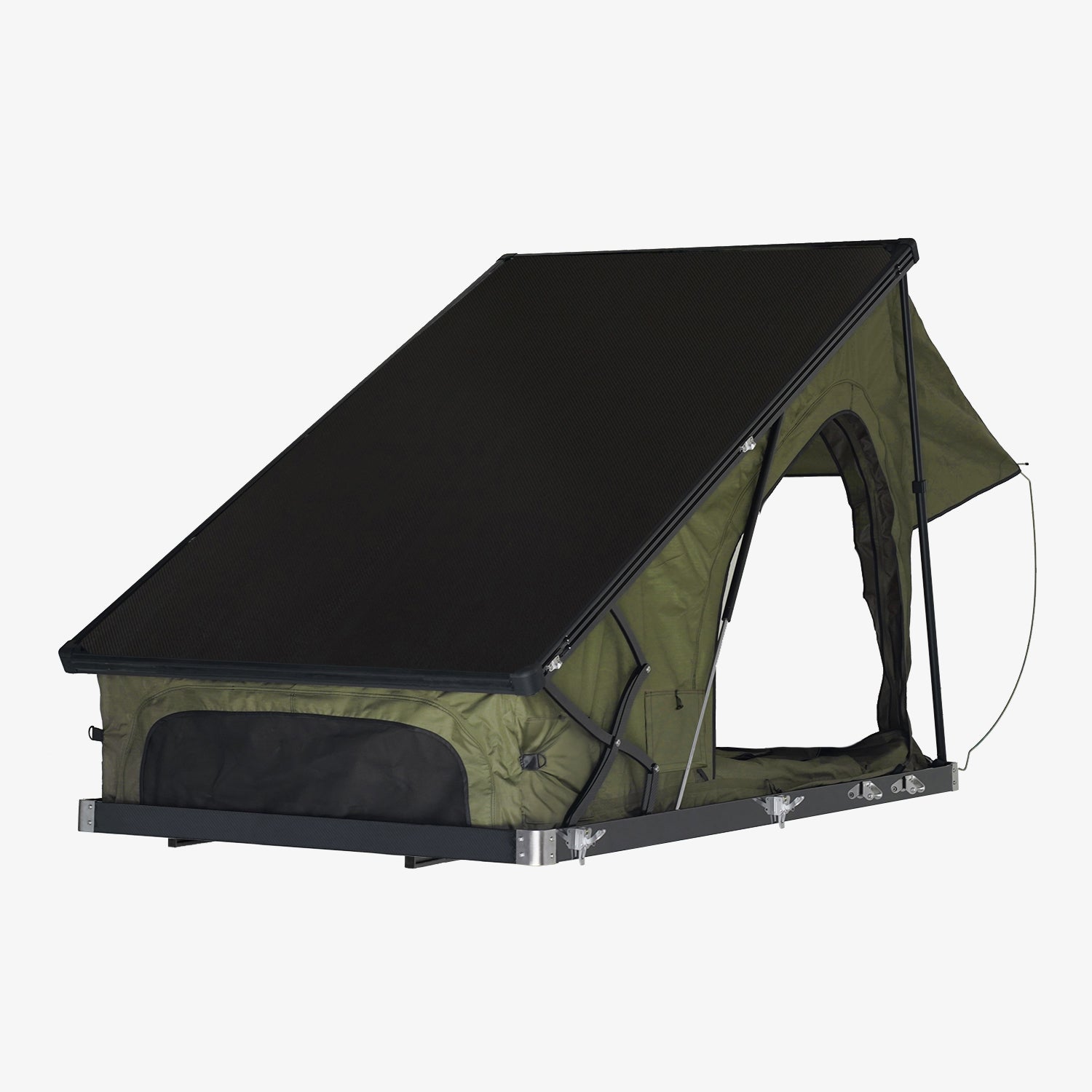
    Inspired Overland built the Carbonlite-X around a single number: 93 pounds. That makes it the lightest hardshell rooftop tent on the US market, and for anyone driving a crossover, a wagon or a truck with a modest roof rating, that weight decides whether a hardshell is possible at all. At $3,499 it undercuts most premium clamshells, though a one-year warranty and a very short public track record keep it out of the top tier.

    Who it’s for

    The Carbonlite-X answers a specific problem. Most hardshell tents weigh 140 to 250 pounds, which blows past the dynamic roof load rating of the vehicles a lot of people actually own. A Subaru Outback, a RAV4, a 4Runner: these top out near 165 pounds of moving load including the rack. Add a 50-pound crossbar set to a 200-pound tent and the math fails before you leave the driveway.

    Buy this tent if you drive something with a tight roof rating and still want a hardshell that opens in under a minute. Buy it if you park in a garage with low clearance, since the closed stack measures 6.3 inches with crossbars included. Skip it if you drive a full-size truck with a bed rack, where the weight penalty of a heavier, more proven tent costs you nothing.

    Key specs

    Spec Carbonlite-X
    US retail price $3,499
    Weight 93 lbs (42 kg)
    Closed height 6.3 in, including mounting crossbar
    Interior floor 85 in L x 49 in W, 48 in peak height
    Shell and frame Carbon fiber and aluminum, carbon composite X-hinge
    Tent fabric Waterproof 2000D UV Oxford, 4-season rated
    Mattress Hybrid air mattress, built-in pump, R-value 8
    Rated occupant load 500 lbs, two insulated heater/AC ports

    Living with it

    The carbon shell does the heavy lifting here, and the payoff shows up every time you drive. A 6.3-inch stack sits low enough that highway wind noise stays closer to a cargo box than a tent, and the fuel economy hit lands well under what a boxy 200-pound clamshell costs you. Billet aluminum latches, four rainfly rods, a telescopic ladder with two extended brackets and a protective cover all ship in the box, so the delivered price is close to the ready-to-camp price.

    The R-8 hybrid mattress deserves attention. Most rooftop tents ship with a 2 to 3 inch foam pad that owners immediately supplement with an insulated pad for shoulder-season trips. An R-value of 8 removes that purchase and that packing problem. Two insulated climate ports let you run a diesel heater or a portable AC without cutting fabric, which is a feature usually reserved for tents costing $1,000 more. Integrated T-slot channels on the shell take solar panels, awnings or light gear.

    Now the honest part. Inspired Overland lists the Carbonlite-X as sleeping four, and the interior floor measures 85 by 49 inches. That is narrower than a standard queen mattress. The company’s own Carbonlite, which shares an identical 85 by 49 interior, is listed as a two-person tent. Two adults fit comfortably, two adults plus two small children fit in the way that tent capacity ratings usually mean, and four adults do not.

    Public owner feedback remains thin. One Expedition Portal owner reported it as “93lbs and super roomy” and recommended it, while other posters in the same thread flagged the absence of independent reviews and raised questions about the fabric and stitching quality of the tent walls. Carbon fiber shells hold up well against impact and UV in principle, though nobody has published multi-year data on this specific product. Early-adopter risk is real at this price.

    Cost of ownership

    The $3,499 sticker is not the landed cost. You need crossbars rated for the load, and Inspired Overland sells a matching carbon fiber crossbar kit at $299. If your vehicle has factory rails only, budget $250 to $600 for a proper aftermarket bar set, and remember that the bars themselves count against your dynamic rating. A 93-pound tent plus 30 pounds of bars lands near 123 pounds, which fits inside a typical 165-pound dynamic limit with headroom for a solar panel. That same headroom vanishes with almost any other hardshell on the market.

    Static load, meaning the weight your roof holds while parked, runs three to five times the dynamic figure on most vehicles, commonly 700 pounds or more. Sleeping in the tent is rarely the constraint. Driving with it is.

    Running costs stay low: no annual re-proofing if you store it dry, no moving parts beyond hinges and latches. The warranty is where the value argument softens. Inspired Overland covers its rooftop tents for one year, while iKamper and several competitors extend two years or more on the shell. On a $3,499 purchase you expect to keep for a decade, twelve months of coverage is short. Verify the current terms with the seller before ordering, since dealer policies vary.

    How it compares

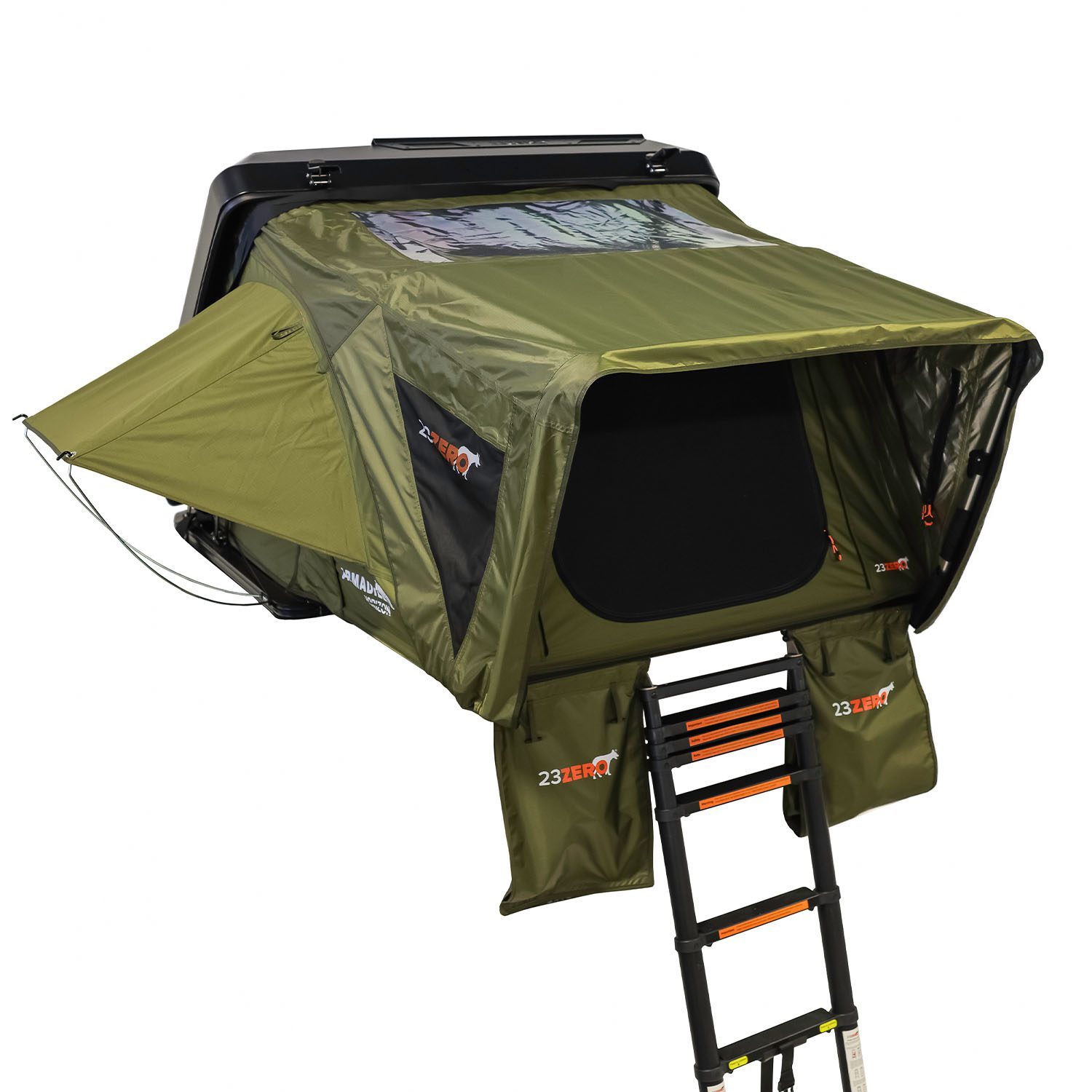
    The 23Zero Armadillo Horizon 3 is the opposite philosophy. Its 14-gauge welded aluminum shell, oversized windows on every side and 68 by 83 inch sleeping footprint make it the more livable tent, and the build feels bulletproof. It also weighs 246 pounds and lists between $3,995 and $4,295. On a 4Runner with a 165-pound dynamic rating, that tent is legally unmountable on the roof.

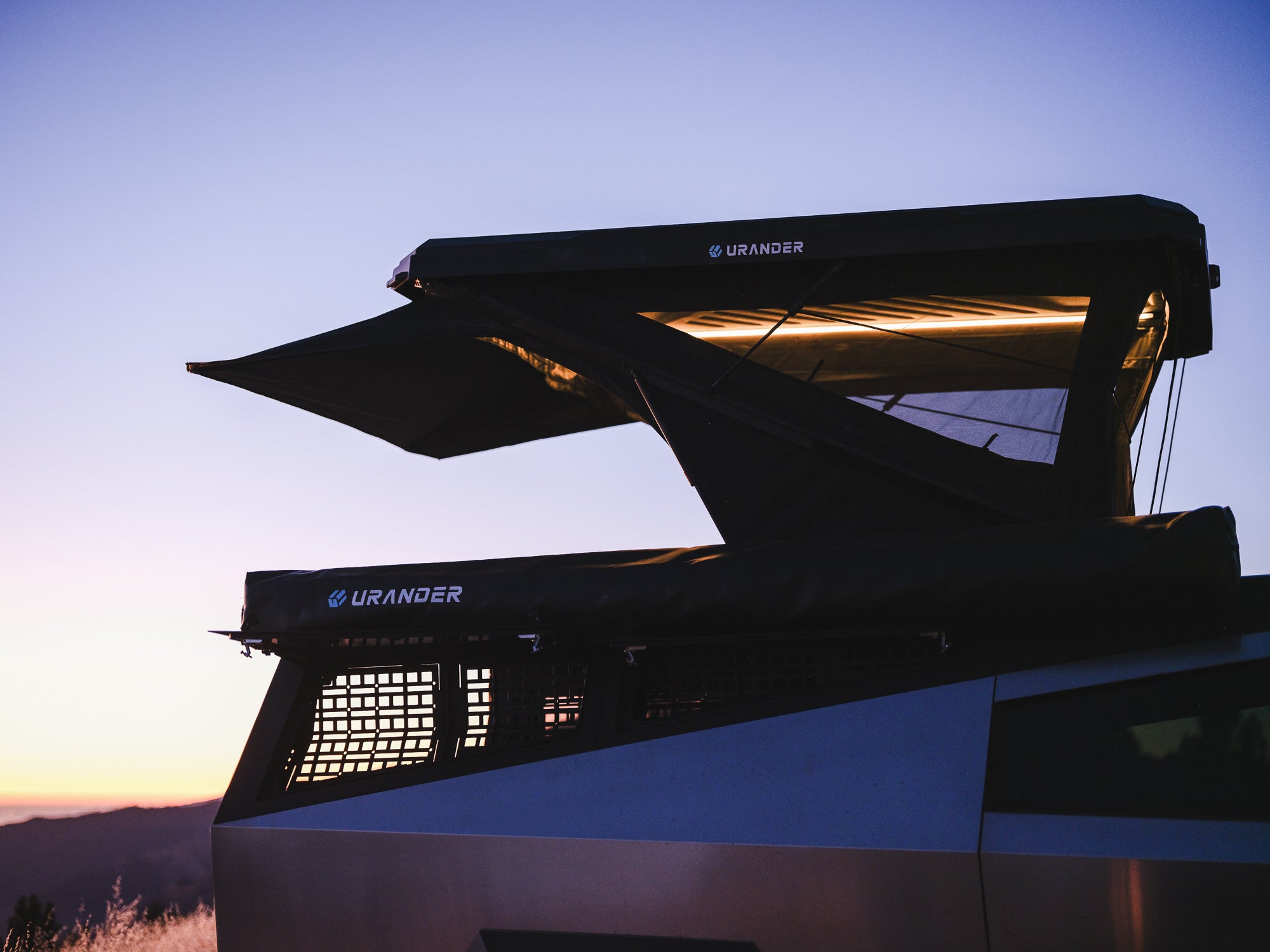
    The Urander CyberCamp Pano targets Cybertruck owners specifically, weighs 145 pounds and sells around $2,495 on sale from $3,125. Its 360-degree panoramic windows, integrated LED light bars and 300D breathable upper fabric make it the nicer place to wake up. Fit is the catch, since it is engineered around one vehicle.

    Against the broader field, the Roofnest Falcon 3 EVO runs about $3,795 at roughly 140 pounds with a 30-second opening, and the iKamper Skycamp 3.0 sits near $4,199 at about 145 pounds with a fold-out floor that nearly doubles interior space. Both are more proven products with longer support histories. Both weigh 50 percent more. That is the whole decision in one sentence.

    FAQ

    Will the Carbonlite-X fit my vehicle’s roof rating?

    Check your owner’s manual for the dynamic roof load, then add the tent’s 93 pounds to the weight of your crossbars or platform rack. Factory bars run 20 to 40 pounds, aftermarket bars 25 to 50 pounds, and full platform racks 70 to 90 pounds. Most cars, trucks and SUVs allow 165 pounds dynamic, so the Carbonlite-X clears with bars but not with a heavy platform rack plus extra gear.

    Does it really sleep four people?

    Two adults, comfortably. The 85 by 49 inch floor is narrower than a queen bed, and Inspired Overland lists the same footprint as a two-person tent on its standard Carbonlite. Treat the four-person figure as two adults and two children.

    Can it stay mounted year round?

    Yes, and the 6.3-inch closed height makes that practical in a way most hardshells do not. Expect a measurable fuel economy penalty on the highway, plus reduced garage clearance. Owners who commute daily usually pull the tent for winter, which takes two people and a free wall.

    Bottom line

    The Carbonlite-X earns its price on a single, genuinely hard-won engineering result: a real hardshell rooftop tent at 93 pounds with a 6.3-inch closed profile and an R-8 mattress. If your roof rating rules out a Roofnest or an iKamper, this is close to the only door left, and the included ladder, cover and heater ports mean you are not nickel-and-dimed after checkout. The one-year warranty and the near-total absence of long-term owner reports are what hold the score down. Buy it for the weight, buy it from a dealer with a clear return policy, and go in knowing you are early.

  • Aventon Abound SR

    Aventon Abound SR

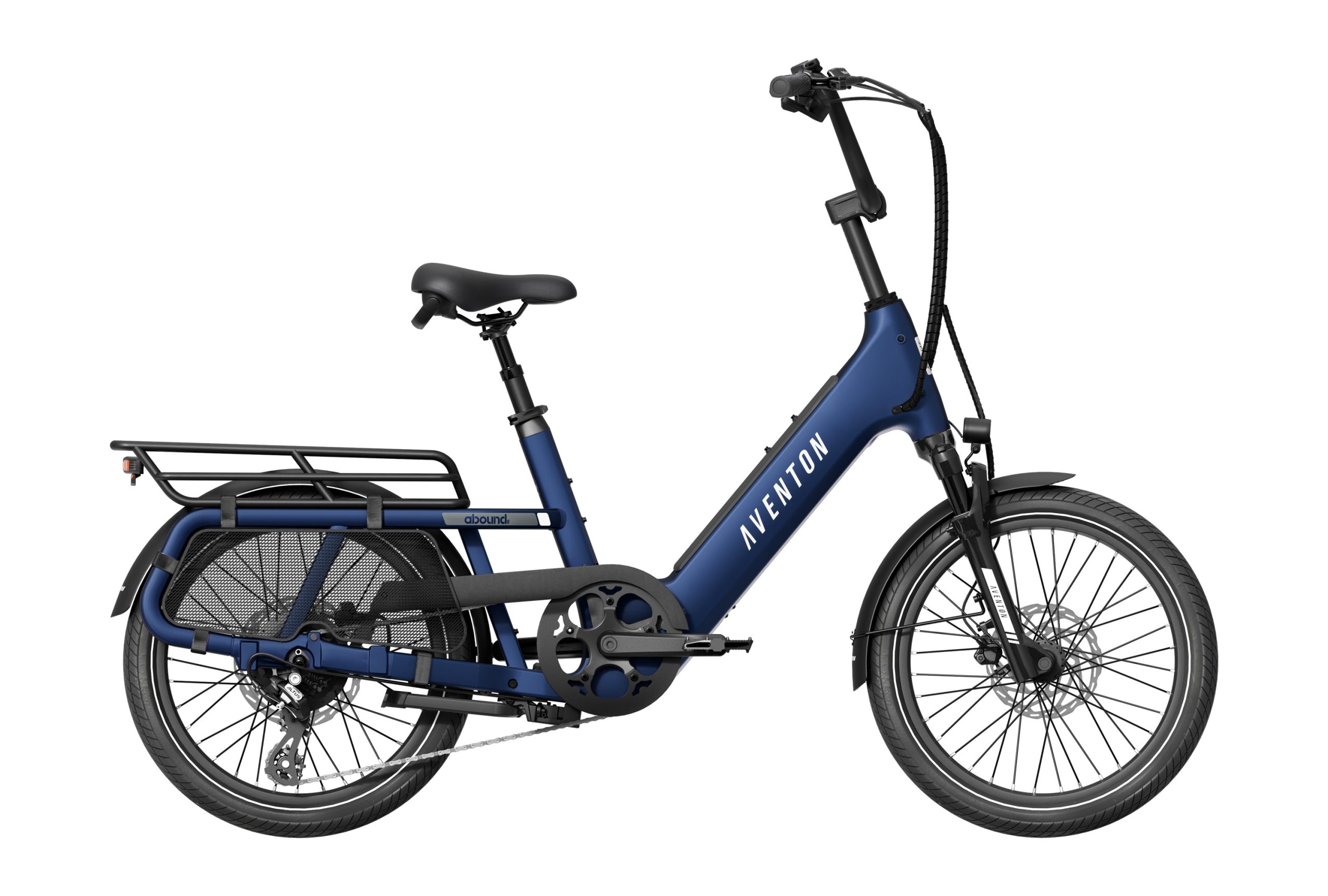
    The Aventon Abound SR is a short-tail cargo bike that rides more like a sporty commuter than a truck, and that is the point. At $2,199 it undercuts comparable mid-tail bikes by a wide margin while adding GPS tracking, geofencing, and a locking battery that most rivals charge extra for. Real-world range under load falls well short of the 60-mile claim, and Aventon sells the bike in exactly one size.

    Who it’s for

    Buy the Abound SR if you want to replace car trips with a bike that still handles like a bike. The 45.3 inch wheelbase is short for a cargo model, so it threads traffic and parks in spaces a long-tail cannot use. Aventon rates the rear rack at 143 pounds and the whole system at 440 pounds, which covers one child, a week of groceries, or a large adult passenger on shorter hops.

    Parents hauling two kids should look at a longer rack. The captain’s chair accessory works, but OutdoorGearLab found children struggled to climb in and out of it. Riders over 6’1″ will also hit a wall: the seatpost runs short, and with one frame size available there is no taller option to move to.

    The security package makes this a strong pick for anyone locking up outdoors in a city. The Aventon Control Unit locks the kickstand, locks the battery to the frame, requires a password to power on, sends movement alerts, and supports geofencing.

    Key specs

    Spec Detail
    Motor Shengyi 36V 750W rear hub, 1,188W peak, 80 Nm, with 30-second Boost Mode
    Battery 36V 20Ah (733Wh), LG 21700 cells, UL 2271 certified
    Range (claimed / tested) Up to 60 miles claimed; OutdoorGearLab recorded 28.4 miles over 1,600+ feet of climbing without throttle
    Class and speed Class 2 out of the box, 20 mph; Class 3 selectable to 25 mph
    Weight and capacity 80 lb; 440 lb total limit; 143 lb rear rack rating
    Brakes Tektro HD-E3520 hydraulic disc, 180mm front / 203mm rear
    Drivetrain and sensing Shimano Altus 8-speed, 12-32T cassette, double-sided bottom bracket torque sensor
    Fit One frame size, riders 4’11” to 6’3″; 50mm suspension fork and 50mm suspension seatpost
    Warranty 2 years, lifetime frame with registration; UL 2849 and TUV certified

    Living with it

    The gravity-cast 6061 frame is the standout piece of engineering. Welds are nearly invisible, and reviewers consistently describe the chassis as stiff and predictable even fully loaded, which separates the Abound SR from cheaper cargo bikes that flex under weight. OutdoorGearLab scored ride quality 9 out of 10 and put it third of eight cargo bikes tested at 84 points overall.

    Power delivery is strong. Testers measured 1,234 watts at the wheel and 0 to 20 mph in 5.1 seconds on throttle, and the bike held 16.3 mph on a 9 percent grade. Boost Mode adds up to 120 percent torque for 30 seconds, which matters when you pull away from a stop sign with 100 pounds on the back. The double-sided torque sensor feels natural, though riders coming from Bosch systems have complained that the three assist levels step up abruptly rather than progressively.

    Range is where expectations need adjusting. Aventon’s 60-mile figure assumes ECO mode on flat ground. OutdoorGearLab’s hilly test route returned 28.4 miles with no throttle use, and they pinned part of the blame on the 3 inch tires, which ride nicely and cost efficiency. Other reviewers landed around 40 miles on gentler terrain. Plan your day around 30 to 40 miles, and the bike will not surprise you.

    Smaller irritations add up. The headlight is weak and uses a proprietary connector, so upgrading is awkward. There is no bell. Only one phone can pair to the bike at a time, which frustrates households sharing it. The rear wheel needed spoke retensioning after 100 miles in testing, so check spoke tension during the first month. Battery removal requires the app, a reasonable anti-theft measure that becomes a problem when your phone dies in a parking garage.

    Cost of ownership

    Charging a 733Wh pack costs about 13 cents at the US average residential rate near 18 cents per kWh, and takes roughly 4.5 hours on the included 4A charger. The 4G connectivity behind the tracking and geofencing features is free for the first year, then costs $20 per year or $2 per month. Budget for it, since the security features are a real part of the value here.

    Aventon’s two-year component warranty and lifetime frame warranty beat most direct-to-consumer rivals, and the brand has a dealer network, so warranty service does not automatically fall on you. Set against that, multiple review outlets and buyers have reported slow or unhelpful customer support. The dealer route is the safer path if one is nearby.

    Consumables follow normal cargo-bike patterns. An 80-pound bike carrying loads chews through brake pads and rear tires faster than a commuter, so expect pad replacement roughly twice as often as on a standard bike. The Shimano Altus drivetrain uses inexpensive, widely stocked parts, which keeps shop bills down.

    How it compares

    The obvious in-house comparison is the Aventon Abound LR at $1,999. It costs $200 less, shares the same 733Wh battery and 80 Nm motor, and adds a longer MIK-compatible rack that fits two child seats plus integrated turn signals and footboards. If your priority is hauling two kids, the LR is the better buy. The SR trades that capacity for a shorter wheelbase and sharper handling.

    Against the Velotric Discover 3 at $1,999, you are choosing between cargo capability and commuter refinement. The Discover 3 has the better fork and the smoother ride. The Abound SR carries 143 pounds on the rack, which the Discover 3 does not attempt.

    The Velotric Breeze 1 at $1,799 and the Velotric Fold 1 Plus at $1,449 both undercut the Abound SR by design. The Breeze 1 weighs 48 pounds and prioritizes comfort. The Fold 1 Plus solves apartment storage. Neither hauls meaningful cargo, so they belong on your list only if you were unsure you needed a cargo bike at all.

    Shoppers watching the budget should note the Heybike ALPHA at $1,299, a mid-drive fat-tire bike with 105 Nm and a 400-pound limit. It costs $900 less and gives up the security suite, the cargo rack rating, and the frame stiffness.

    Among market rivals, the Specialized Globe Haul ST is similarly equipped for roughly $2,500 more, which is the strongest argument in the Abound SR’s favor. The Lectric XPedition 2.0 undercuts it substantially and gives up the frame quality and the tech.

    FAQ

    Can it carry two children?

    One child seat fits comfortably. Two is a stretch on the short rear rack, and the captain’s chair is difficult for kids to climb into. The Abound LR with its longer rack is the correct Aventon model for two passengers.

    Do I have to pay the ACU subscription?

    The bike rides fine without it. The 4G link powers GPS tracking, movement alerts, and geofencing, and those stop working when the free first year ends unless you pay $20 per year. Bluetooth features that work at close range continue regardless.

    Will it fit a 6’2″ rider?

    Aventon rates the single frame size for riders from 4’11” to 6’3″, but reviewers found the seatpost too short above about 6’1″. Taller riders should test-fit at a dealer before ordering, or budget for a longer 30.9mm post.

    Bottom line

    The Abound SR is a well-built, genuinely fun cargo bike that costs far less than the mid-tail bikes it rides against. The stiff cast frame and strong loaded motor are worth the money. Weigh the $2,199 price against roughly 30 miles of realistic loaded range, one frame size, a subscription after year one, and support that reviewers have called inconsistent. For a solo rider hauling one kid or a cargo of groceries in a city, it clears the bar.

  • 23Zero Armadillo Horizon 3

    23Zero Armadillo Horizon 3

    The 23Zero Armadillo Horizon 3 is a genuinely well-equipped hardshell rooftop tent with a 68 x 83 in sleeping platform, blackout fabric, and a heater duct built into the wall. Then you read the weight: 246 lb with rails and ladder, against a typical vehicle dynamic roof rating of 100 to 165 lb. At roughly $4,295, most buyers will discover their truck cannot legally carry it, which is a strange place for a rooftop tent to land.

    Who it’s for

    This tent suits owners of purpose-built platforms: bed racks on full-size pickups, flatbeds, expedition trailers, and heavy-duty aftermarket racks with documented dynamic ratings above 250 lb. If you already run a Leitner, a Front Runner slimline on a rated truck bed, or a dedicated tent trailer, the weight stops being the story and the feature set starts looking strong.

    It also fits families of three who want real interior volume rather than a two-person clamshell. The 46 in interior height and 68 in width give three adults space to sit up and change without elbowing each other.

    Owners of stock SUVs, crossovers, Wranglers with factory crossbars, or anything relying on a roof rail rating in the 100 to 165 lb range should stop reading and look at lighter options. A Wrangler JL with factory crossbars is rated to 150 lb dynamic, which a 165 lb hardshell already exceeds before hardware. This tent is 246 lb.

    Key specs

    Spec Figure
    Weight 246 lb with rails and ladder
    Sleeping footprint 68 in W x 83 in L x 46 in H
    Mounting footprint 55.5 in W x 75.25 in L x 13.25 in H closed
    Open dimensions 75.25 in W x 89 in L x 50.5 in H
    Shell 14 GA fully welded aluminum, rounded corners
    Fabric ECO13B with Light Suppression Technology
    Mattress Self-inflating with dual fill ports (listed 2 in and 3 in across sources)
    Roof rails Dual adjustable T-slot, 50 lb capacity

    Living with it

    The Horizon 3 opens left only, on a gas-strut-assisted high hinge. 23Zero dropped the spring poles found on earlier Armadillos and replaced them with an integrated front rainfly hoop, which removes a fiddly step from setup in rain. Left-only opening also removes a choice: your door faces one side of the vehicle forever, so plan your mounting orientation around how you want camp to sit relative to your awning and your fire.

    Light Suppression Technology is the feature that owners of previous 23Zero tents mention most. The ECO13B fabric blocks daylight properly, which matters in summer at high latitudes and matters more if anyone in the tent sleeps past sunrise. It also cuts solar gain, so the interior stays cooler through a hot afternoon than a standard poly-cotton canopy.

    Ventilation is thorough. Two side windows at 40 x 23 in, a 43 x 7 in rear window, a 36 x 20 in skylight, and a 28 x 30 in door give real cross-flow. The 4.5 in heater and cooler duct port is a genuinely useful inclusion for anyone running a diesel heater in shoulder season, and it saves you cutting a hole in a $4,000 tent.

    Storage is unusually good for the category: a ten-pocket gear loft, side organizers, a boot bag, and dual hanging gear bags. The included 43 in dimmable USB LED bar with white, amber, and blended modes plus a 12V, USB-A, and USB-C power module covers the accessories most people buy separately.

    The mattress specification is genuinely inconsistent across sources. 23Zero’s own listing and some dealers describe a 3 in self-inflating mattress with dual fill ports, while other dealer spec tables say 2 in. Ask your dealer to confirm before ordering if mattress depth drives your decision, and expect most buyers to add a topper regardless.

    Installation requires two people minimum. At 246 lb, treat it as a three-person lift or use a hoist system.

    Cost of ownership

    Dealers list the Horizon 3 at $4,295, with 23Zero’s own site showing figures closer to $3,995 during promotions. Free shipping is common, which matters on a package this heavy.

    The hidden cost is the rack. If your vehicle cannot handle 246 lb dynamic, budget another $1,000 to $2,500 for a bed rack or a rated aftermarket system, and add the fuel penalty of carrying a quarter-ton on the roof. Real-world mileage losses of 10 to 25% are normal with a hardshell up top, and this one is heavier than most.

    Warranty coverage is thinner than the price implies. 23Zero provides a two-year limited manufacturer’s warranty on the tent body and one year on the transit cover and straps. Coverage excludes UV exposure, zipper wear, storm damage, and car wash damage, and 23Zero reserves the right to prorate the warranty based on usage. Full-time, commercial, or rental use voids it entirely, which rules out anyone living out of the vehicle year-round.

    Compare that to the lifetime and limited-lifetime warranties common at this price in the broader outdoor market, and two years starts to look like a real gap.

    How it compares

    The iKamper Skycamp 3.0 costs about the same at $4,295 and weighs roughly 145 to 165 lb, with a 900 lb static capacity. It sleeps four in a fold-out design that takes closer to 60 seconds to deploy. It fits a far wider range of vehicles, and that alone decides the matchup for most shoppers.

    The Roofnest Falcon 3 EVO undercuts both at about $3,795 and roughly 140 lb. Its clamshell opens in around 30 seconds with two latch releases, and the U-bar design adds roughly 30% more head and foot room than a conventional clamshell. Roofnest builds its top shell from PC-ABS rather than aluminum, which insulates better but dents differently.

    Against those two, the Horizon 3 wins on interior width, storage, and the heater port. It loses decisively on weight, and weight is the specification that determines whether you can buy the tent at all.

    FAQ

    Will the Armadillo Horizon 3 fit my SUV?

    Probably not without a rack upgrade. Most cars, trucks, and SUVs carry a dynamic roof rating around 165 lb, and many factory systems sit between 100 and 165 lb. The Horizon 3 weighs 246 lb with rails and ladder before you add bedding. Check your owner’s manual for the dynamic figure, then check your rack manufacturer’s rating separately, because the lower of the two governs. Bed racks, flatbeds, and rated aftermarket platforms are the realistic mounting options.

    What is the difference between dynamic and static load?

    Dynamic load is what your roof can carry while the vehicle moves, and it accounts for bumps, cornering, and braking forces. Static load is what it holds while parked, and it runs far higher, often 600 to 900 lb. Sleeping in the tent is a static situation, so occupant weight rarely causes problems. Driving is where the 246 lb number bites.

    Can I get a right-side opening version?

    No. This model is left-open only, and dealers list it that way explicitly. Decide your camp layout before mounting, because reversing the orientation means turning the tent around on the rack and changing which end faces forward.

    Bottom line

    Buy it if you run a bed rack, flatbed, or trailer with a documented dynamic rating well above 250 lb, you want three-person space with genuine blackout fabric and a factory heater port, and a two-year warranty does not bother you.

    Skip it if you drive a stock SUV, a Wrangler on factory crossbars, or anything with a roof rating under 200 lb. Skip it also if you value warranty length or plan to live out of your vehicle, since full-time use voids coverage. At $4,295 the iKamper Skycamp 3.0 and the Roofnest Falcon 3 EVO deliver comparable quality at roughly 100 lb less, and for most buyers that difference is the whole decision.

  • Urander CyberCamp Pano

    Urander CyberCamp Pano

    The Urander CyberCamp Pano is a hard-shell rooftop tent engineered around the Tesla Cybertruck, with 360 degree panoramic windows and a claimed sub-10-second opening time. It lists at $2,495 after a discount from $3,125, which undercuts established hardshell brands by more than a thousand dollars. The components look serious on paper, but a vehicle-locked design, a 145 lb roof load, a manual inflation step that has already drawn owner complaints, and almost no independent testing make this hard to recommend at the current price for anyone outside a narrow group.

    Who it’s for

    The audience is precise: Cybertruck owners who already run a roof or bed rack platform and want a tent shaped for that vehicle’s geometry rather than adapted to it. If you fit that description, the Pano’s case is reasonable. If you drive anything else, this product does not apply to you at all.

    The interior measures 83 by 46 inches. That is longer than a queen mattress but 14 inches narrower, so two adults sleep close. Solo campers get a generous space. Couples who already share a full-size bed comfortably will adapt; anyone who needs a queen will feel the squeeze.

    • Cybertruck owners with an existing rack platform
    • Weekend campers who value fast setup over interior volume
    • Buyers who want panoramic views and a terrace-style open configuration
    • Owners who camp within reasonable range of home, given the efficiency penalty

    Key specs

    Spec Detail
    Type Hard-shell clamshell rooftop tent, Cybertruck-specific fitment
    Sleeping area 83 in L by 46 in W, rated for 2 people
    Closed dimensions 91 by 52 in, 7 in tall at center and 5 in at the sides
    Open headroom 45 in maximum
    Weight 145 lb
    Mattress 3.25 in hybrid open-cell foam, 14,000 Pa pump, 1 min inflate / 2 min deflate
    Structure Alloy composite shell, aircraft-grade aluminum lid, carbon fiber and titanium rods, Stabilus gas springs
    Setup time and price Under 10 sec to open, about 10 sec to close; $2,495 (from $3,125)

    Living with it

    Setup speed is the strongest selling point. Gas springs from Stabilus, the supplier behind Porsche and Mercedes hardware, lift the shell in under 10 seconds, and closing happens from a single position rather than requiring laps around the vehicle. Compared with a softshell tent that needs 10 minutes and a ladder repositioning, this is a meaningful daily difference on a multi-night trip.

    The mattress works against that speed. The 3.25 inch hybrid pad inflates with a 14,000 Pa pump, and at least one owner on the Cybertruck Owners Club forum objected loudly to paying premium money for a tent that requires hand pumping, calling the arrangement bad engineering. One minute of inflation is not a hardship in itself. Paying near $2,500 and then pumping by hand feels inconsistent with the ten-second promise, and that gap is what irritates people.

    Fitment carries a documented wrinkle. Owners report that the side compartment sits on top of the tonneau applique, which must be removed before the tent will open. Urander has acknowledged this and discussed a pass-through design as a future fix. Anyone who uses the Cybertruck bed regularly on camping trips should understand that constraint before ordering.

    The included kit is generous: a 7.5 foot ladder, universal mounting hardware, a textile chaise lounge, two detachable gear pockets, two USB-powered LED light bars with ten brightness levels in warm and white, and two carbon fiber awning rods. Competing brands charge separately for several of these.

    Independent testing is where confidence breaks down. Established hardshell tents get measured for wind noise, water intrusion, condensation and multi-season durability by outlets that test dozens of tents. The Pano’s coverage so far consists of manufacturer material, a promotional video and forum posts. First-model-year products from small brands carry real risk, and nothing here has been verified against a competitive field.

    Cost of ownership

    The $2,495 sticker is the beginning. Mounting a 145 lb tent requires a rack platform, and Urander’s own Cybertruck Bed Rack Kit lists from $2,495. Owners who already run a platform escape this. Everyone else should treat the real entry cost as closer to $5,000, which reframes the value argument entirely.

    The efficiency penalty is the recurring cost. A 145 lb box sitting in the airstream of an EV costs range through both mass and aerodynamic drag, and the effect grows with speed. Highway trips will show it most. Test your own route with the tent mounted before planning a long drive around your usual range figures.

    Maintenance is light. Fabric wants cleaning and reproofing every year or two, zippers want lubricating, and the gas springs are a wear item measured in years rather than months. Shell tents generally survive weather better than soft tents, which is much of why people buy them.

    Resale is the hidden expense. A Cybertruck-specific tent sells only to Cybertruck owners, a small and geographically scattered pool. Universal-fit hardshell tents from established brands hold value across every vehicle with crossbars. Expect a steeper depreciation curve here.

    Warranty terms are published on Urander’s site and worth reading closely before purchase, particularly the coverage period on the shell, the gas springs and the fabric.

    How it compares

    The Roofnest Falcon 3 EVO lists at $3,795 and weighs 130 lb, so it costs $1,300 more and saves 15 pounds on your roof. It sleeps two, opens in about 30 seconds, and Roofnest has years of independent testing behind it. The Pano opens faster and costs far less.

    The iKamper Skycamp Mini 3.0 lists at $4,295, with the full Skycamp 3.0 sleeping four and folding out to a king-size floor in under 60 seconds. iKamper’s honeycomb aluminum floor panels and fiber-reinforced shell are proven across many seasons of third-party review. That is a different budget tier and a different capacity class.

    Both alternatives fit any vehicle with crossbars, which means they move with you to your next truck. That single fact is the strongest argument against the Pano for most buyers, and price alone does not overcome it unless you are committed to the Cybertruck long term.

    FAQ

    Is the CyberCamp Pano an air conditioner?

    No. It is a hard-shell rooftop tent. The name appears in searches alongside camping cooling gear, which causes confusion, but the product contains no cooling system. Tent air conditioners are separate purchases and generally run $779 to $1,399 on their own.

    Will it fit a truck other than a Cybertruck?

    Urander designed it around Cybertruck geometry and includes a universal mounting kit. Physical mounting on another vehicle with an adequate rack may be possible, but the closed dimensions of 91 by 52 inches and the tonneau-specific fit notes mean you should confirm directly with Urander before assuming compatibility.

    Do I need to buy a rack separately?

    You need a rack platform rated for a 145 lb static load plus two occupants. Urander sells a Cybertruck Bed Rack Kit from $2,495. Owners who already run a compatible platform avoid that cost, and everyone else should include it in the budget from the start.

    Bottom line

    Buy it if you own a Cybertruck, already have a rated rack platform installed, plan to keep the truck for years, and want the fastest-opening hardshell available at a price well under Roofnest and iKamper. The shell materials, Stabilus springs and carbon-titanium rods are legitimately good components, the included accessory package is broad, and the sub-10-second setup is genuine convenience on a multi-night trip.

    Skip it if you drive anything else, if you need a rack platform too, or if you want a tent you can carry to your next vehicle. Skip it also if you camp with a partner who needs more than 46 inches of width, if you use the Cybertruck bed on camping trips and cannot live with removing the tonneau applique, or if you want a product validated by independent testing rather than manufacturer claims and forum posts. At $2,495 with the rack question unresolved, waiting for the promised pass-through revision and for real third-party reviews costs you nothing but a season.

  • HEIMPLANET Mavericks

    HEIMPLANET Mavericks

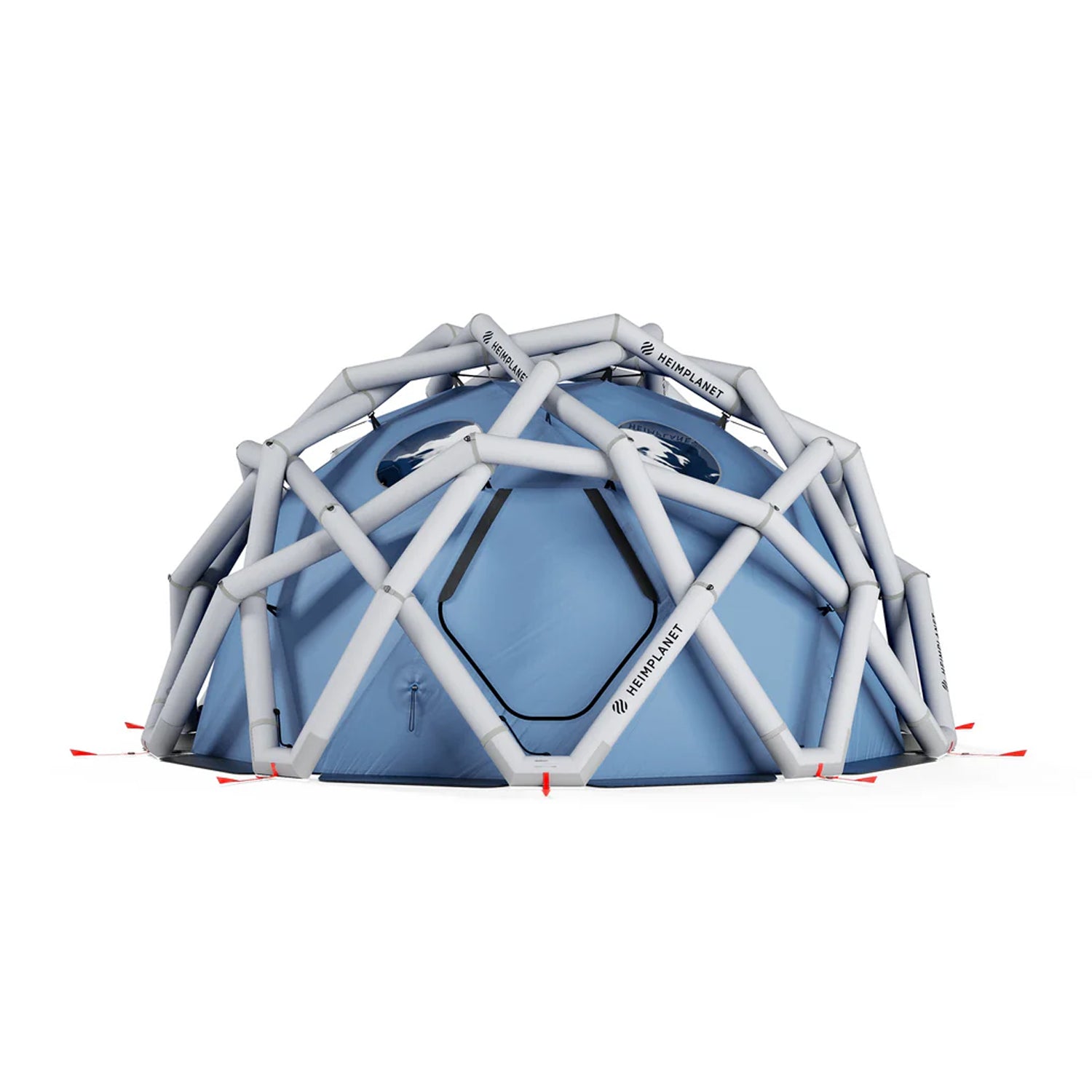
    The HEIMPLANET Mavericks is one of the few tents on the market with a credible claim to surviving a real storm, and the engineering behind it holds up to scrutiny. At roughly $5,999 in the US, though, it asks expedition money for a shelter that ships without an inner tent and weighs 55 lb packed. Buy it for the wind rating and the repairability, because the value math does not work on any other basis.

    Who it’s for

    This tent targets a narrow group: film crews, research teams, guided-trip operators, and events that get pitched in exposed places and stay there for weeks. The geodesic dome and the Inflatable Diamond Grid airframe exist to flex under load rather than snap, which matters when a front rolls through at 3 a.m. and nobody wants to re-pitch in the dark.

    It also appeals to a second group: overlanders and van owners who want a basecamp that goes up fast and looks unlike anything else at the trailhead. That group should read the cost of ownership section carefully.

    Backpackers and weekend car campers have no business here. The packed size alone, 39.4 x 23.6 x 15.7 in, eats a large chunk of a cargo area before you load anything else.

    2026 buyer note: This review covers the MAVERICKS expedition tent, including the Blue Ice and Basecamp variants shoppers commonly compare. HEIMPLANET describes the platform as a base camp or group tent with more than 13 square meters of floor area, a roughly two-meter standing height, one-person setup, and a design target up to 180 km/h / 110 mph winds. Those are real differentiators, but they do not turn it into a general camping bargain.

    Key specs

    Spec Figure
    Capacity Up to 10 people (142 sq ft floor)
    Weight 55.5 lb (25 kg)
    Packed size 39.4 x 23.6 x 15.7 in
    Interior height 76.8 in (195 cm); 91.3 in peak
    Flysheet 75D recycled polyester, silicone/PU, 5,000 mm HH
    Floor 210D nylon, PU, 10,000 mm HH
    Airframe 140 HPE polyester with TPU bladder, 10 chambers, 35 crossing points
    Wind rating Claimed to 180 km/h (112 mph)

    Living with it

    The One Pump System is the headline feature and it earns its place. A single valve feeds all ten chambers, so one person can raise the whole structure in about ten minutes with the two included double-stroke floor pumps, and two people can do it in roughly five. HEIMPLANET’s smaller tents behave the same way in independent testing: a GearJunkie tester clocked repeat setups of the Cave at one to three minutes once he knew the sequence, while the first pitch took considerably longer and needed the manual open.

    Expect the same learning curve here at ten times the volume. Plan your first pitch in daylight, on grass, with nothing else on the schedule.

    The ten-chamber design is a safety feature, not marketing. Pinch clips isolate a damaged chamber so the dome stays standing on the remaining nine while you patch. That is the single strongest argument for an air frame over aluminum poles in a storm, because a snapped pole ends the trip and a punctured strut usually does not.

    Two practical annoyances follow the technology around. Air frames lose pressure as temperatures drop overnight, so a frosty morning often means walls that have gone soft and a few strokes on the pump to firm them up again. Patching a slow leak in wind or rain also ranks among the more miserable field repairs available, and finding the leak takes longer than fixing it.

    Note what the box contains: tent, two floor pumps, two sets of eight pegs, a removable groundsheet, duffel, repair kit, and guy lines. No inner tent. You get a single-wall dome with a groundsheet, which means condensation management falls entirely on the three doors, the roof vents, and your discipline about cooking inside. The 200 cm inner-tent figure quoted on the Basecamp variant refers to interior standing height, not a hanging inner.

    Ten people is a paper number. Divide 142 sq ft by ten and each person gets 14 sq ft, shoulder to shoulder, with nowhere to stack packs. Six adults plus gear is the honest figure, and that is still generous.

    Cost of ownership

    The sticker sits near $5,999 at US retailers, with HEIMPLANET’s own European listing at €5,599. Stock in the US has been intermittent, and at least one American dealer has carried the model as sold out for extended stretches. Factor that in if you have a trip date.

    The long-tail cost story is better than the entry price suggests. HEIMPLANET backs the tent with lifetime support: manufacturing defects get repaired free, other damage gets repaired for a fee, and individual struts are replaceable when one goes beyond saving. The brand also runs a Re-Store buyback program that returns up to 20% of purchase price. For a shelter that will absorb years of abuse, serviceability like that has real financial value.

    Two caveats. International warranty claims put shipping, customs, duties, and VAT on the owner, which can turn a modest repair into a painful invoice. And the pump matters: some listings sell it separately, so confirm what ships with your specific SKU before ordering.

    Budget for a footprint replacement, spare valves, and a second repair kit stored in the vehicle rather than the tent bag.

    How it compares

    The obvious rival is the Hilleberg Atlas Basic at roughly $3,140 to $3,155. It gives you more floor, 166.8 sq ft against 142.1, the same 200 cm standing height, Kerlon 2500 fabric, and an outer tent that weighs 20 lb 1 oz instead of 55.5 lb. Polar research teams have run Atlases at the South Pole for years. Even after adding an Inner Tent 8, the Hilleberg package typically lands below the Mavericks while packing smaller and carrying a documented expedition record. Setup takes longer and demands more hands, which is the tradeoff.

    The HEIMPLANET Mavericks Basecamp sits alongside at €5,499 with the same 13.2 m² floor, 25 kg weight, and three doors, but a 100D polyester ripstop fly rather than the 75D on the Blue Ice. If you want the heavier fly and care less about the colorway, it is the same tent for slightly less money.

    For anyone who wants the air frame at a rational price, HEIMPLANET’s own Cave line starts around $1,249 and delivers the identical inflation system for two to three people. Most buyers drawn to the Mavericks aesthetic actually want a Cave.

    FAQ

    Is the HEIMPLANET Mavericks the same as the Mavericks Basecamp?

    They are closely related versions of HEIMPLANET’s large expedition air-frame tent. The Basecamp listing emphasizes the same 13.2 m² floor, 25 kg weight, short inflation time, and 180 km/h design target, while colorway and fabric details can differ by SKU. Check the exact product page before ordering replacement parts or an inner setup.

    Can the Mavericks really handle 112 mph winds?

    The 180 km/h figure comes from HEIMPLANET and traces back to the tent’s development for the Red Bull Storm Chase, a windsurfing event that deliberately chases storms. The reinforced Diamond Grid spreads load across 35 crossing points rather than concentrating it. Treat the number as a well-supported design target rather than a guarantee, and guy the tent out properly, because a poorly staked dome fails long before the fabric does.

    What happens if a strut punctures in the field?

    Pinch clips seal off the damaged chamber and the remaining nine keep the dome standing, so you get a working shelter while you patch. The included repair kit handles field fixes, and HEIMPLANET sells replacement struts for damage past patching. Locating a slow leak in bad weather is the hard part, so carry soapy water or a spray bottle.

    Does it need an inner tent?

    It ships as a single wall with a removable groundsheet, which works fine in dry cold and in warm weather with the vents open. In humid conditions or with several people breathing inside overnight, condensation on the fly is likely. Plan on a groundsheet plus individual bivy-style protection for sleeping bags, or run the vents aggressively.

    Bottom line

    Buy it if you pitch a basecamp in genuinely hostile weather, keep it up for days at a time, value a structure that can be repaired chamber by chamber, and have a vehicle plus a budget where $5,999 registers as a tool cost rather than a splurge.

    Skip it if you camp on weekends, need to carry the tent more than a hundred yards, want a proper double-wall setup, or care about dollars per square foot. The Hilleberg Atlas Basic delivers more space for roughly half the price, and a HEIMPLANET Cave gives you the same clever airframe for a fifth. At today’s price the Mavericks makes sense for a small professional audience and almost nobody else.

  • NAVEE UT5 Ultra X

    NAVEE UT5 Ultra X

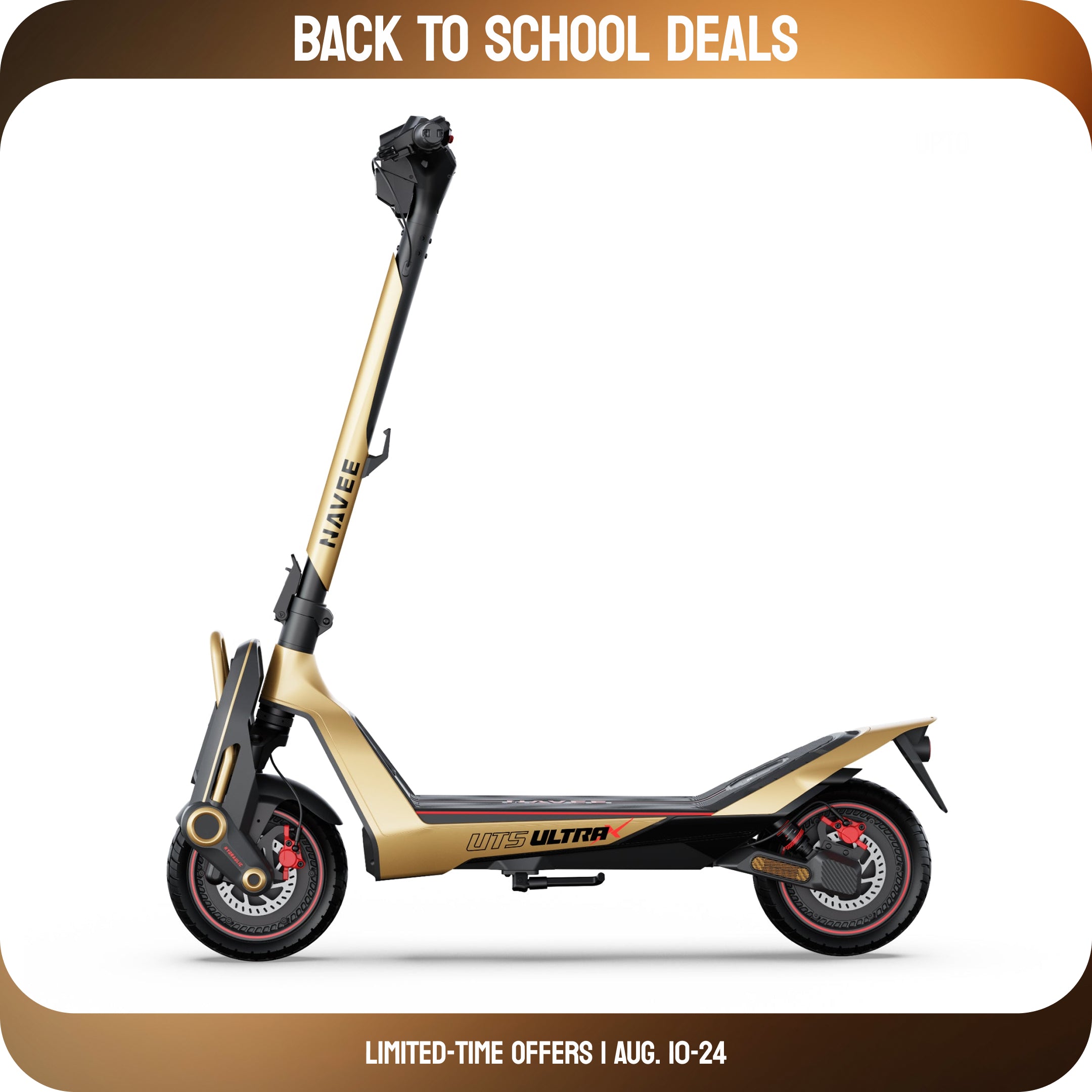
    NAVEE aimed the UT5 Ultra X at riders who want motorcycle-grade hardware under a scooter deck, and the parts list delivers: dual 1,200W motors, a 1,284Wh battery, 130mm hydraulic discs and adjustable hydraulic suspension. Reviewers measured 44 mph, praised the braking, then ran into a throttle dead zone, a left-hand button cluster that fights the rider, and real-world range closer to 30 miles than the advertised 75. At the $2,499 list price it asks a lot; at the roughly $2,099 street price it makes a stronger case.

    Who it’s for

    This scooter serves the performance rider, not the commuter. Ninety pounds of aluminum and battery buys stability at 40 mph, and testers confirmed it tracks straight over rough pavement at speed without weaving. That same 90 pounds makes stairs impossible and loading into a trunk a two-person job.

    The right owner has a garage, a ground-floor entry, or a secure parking space with an outlet. New Atlas described it as a machine for riders with discretionary income who can store it safely, and that framing is accurate. Leaving a gold-accented $2,500 scooter locked outside an office is asking for trouble.

    • Riders who want top-end speed and are legally able to use it
    • Owners with secure ground-level storage and a charging outlet
    • Heavier riders, up to the 330 lb load limit, who find lighter scooters flexy
    • Weekend and recreational riders rather than daily multi-modal commuters

    Key specs

    Spec Detail
    Motors Dual 1,200W rated, 2,400W peak each, 4,800W combined peak
    Battery and charging 60V 22.3Ah (1,284Wh), 3 hr fast charge, 6 hr standard
    Top speed 43 mph claimed, 44 mph measured by independent testers
    Range 74.6 mi claimed at 9.3 mph; 30 to 33 mi measured in mixed Sport riding
    Brakes Front and rear hydraulic disc, 130mm rotors, plus EABS regen
    Suspension and tires Dual hydraulic with adjustable rear damping, 12 in self-healing tubeless
    Weight and load 90.4 lb net, 330 lb max load, 10 in deck height
    Sealing and warranty IPX6 water resistance, 24 month limited warranty

    Living with it

    The brakes deserve first mention because they are the strongest part of the package. Radial-mount master cylinders driving 130mm rotors gave New Atlas “excellent bite” without grabbiness, with front-brake placement mirroring motorcycle convention. On a 90 lb machine capable of 44 mph, braking hardware of this quality is a safety feature rather than a luxury.

    Controls are the weakest part. Testers found a substantial dead zone at the start of throttle travel, which produces lurching when you try to accelerate smoothly from a stop. The left-side button cluster drew harsher criticism: the boost button activates by accident while reaching for any other control. Mode switching requires cycling linearly through options or opening the app, which Notebookcheck called tedious. One reviewer experienced an app disconnection that briefly cut throttle response.

    Range deserves careful reading. The 74.6 mile figure comes from a 9.3 mph test, which is walking pace on a machine built for 43 mph. NAVEE’s own 24.9 mph figure is 37.3 miles. New Atlas recorded 30 to 33 miles in mixed Sport-mode riding. Ride the way this scooter invites you to ride and you get roughly 40 percent of the headline number.

    Suspension arrived stiff from the factory, tuned for stability over plushness. Rear damping adjusts, which helps. One reviewer noticed a weeping oil seal on a fork leg during testing, a single data point rather than a pattern, but worth inspecting on delivery and again after the first month.

    The 10 inch deck height is a real ergonomic factor. Shorter riders step up noticeably to mount, and folding the scooter for transport takes deliberate effort at this weight.

    Cost of ownership

    Retail lists at $2,499, with Amazon and select retailers frequently at $2,099. That $400 swing changes the value calculation meaningfully, so patience pays here.

    Charging a 1,284Wh pack costs roughly 22 cents at typical US residential electricity rates. Ride it hard and you may charge daily, which still totals under $80 a year.

    Consumables cost more than on a lightweight scooter. Twelve-inch tubeless tires with self-healing sealant run higher than standard scooter rubber, and at 44 mph with 90 pounds of machine, rear tires wear quickly. Hydraulic brake pads and periodic fluid service add a shop visit most owners cannot perform themselves. Budget $200 to $350 a year for a rider who uses the performance.

    Legality is a cost in disguise. Most US states cap electric scooters on public roads and paths well below 43 mph, commonly at 15 to 25 mph. A machine built around its top speed spends much of that capability on private property or in a legal grey zone. Check your state and city rules before buying, because a ticket or an impound is a real risk.

    Storage and security add expense too. A heavy chain and ground anchor cost $100 to $200, and few home insurance policies cover a scooter theft without a rider.

    How it compares

    The Segway GT3 Pro sits at a similar $2,500 with dual motors rated far higher on peak output and 11 inch self-sealing tires. Segway’s dealer network and parts availability in the US exceed NAVEE’s, which matters when a suspension seal weeps at month eight.

    The Apollo Phantom Stellar costs more at $2,799 and independent testing measured 49 mph with 37 miles of range, beating the UT5 Ultra X on both counts. Apollo also holds an edge on weather sealing. NAVEE’s answer is price and braking feel, both legitimate arguments.

    Against either rival, the UT5 Ultra X wins on charge time with its 3 hour fast charge and on brake hardware. It loses on control ergonomics, which is the kind of flaw you feel on every single ride rather than once a month.

    FAQ

    Can I actually ride this at 43 mph legally?

    In most US jurisdictions, no. State e-scooter laws commonly limit public-road and bike-path use to between 15 and 25 mph, and some classify faster machines as motor vehicles requiring registration. Verify your local rules first, because the top speed is the main thing you are paying for.

    Can one person carry it up stairs?

    Realistically no. At 90.4 pounds it exceeds what most people can carry safely on a staircase, and testers described loading it into a car trunk as labor-intensive. Plan for ground-level storage.

    Is the 75 mile range figure achievable?

    Only at 9.3 mph, which almost nobody will ride. NAVEE’s own 24.9 mph figure is 37.3 miles, and independent mixed-riding testing landed at 30 to 33 miles. Budget around 30 miles between charges.

    Bottom line

    Buy it if you want a stable, fast, well-braked performance scooter, you have secure ground-floor storage, and you can find it near the $2,099 street price. The chassis, brakes and battery are genuinely good, and the stability at speed drew consistent praise across independent reviews.

    Skip it if you commute and need to carry the scooter, live above the ground floor, or ride in a jurisdiction that caps scooters at 20 mph. Skip it too if control precision matters to you: the throttle dead zone and the misplaced boost button are documented across multiple independent reviews, and no firmware update relocates a physical button. At the full $2,499 list price, the Segway GT3 Pro and Apollo Phantom Stellar both deserve a look before you commit.

  • Aventon Soltera 3 ADV

    Aventon Soltera 3 ADV

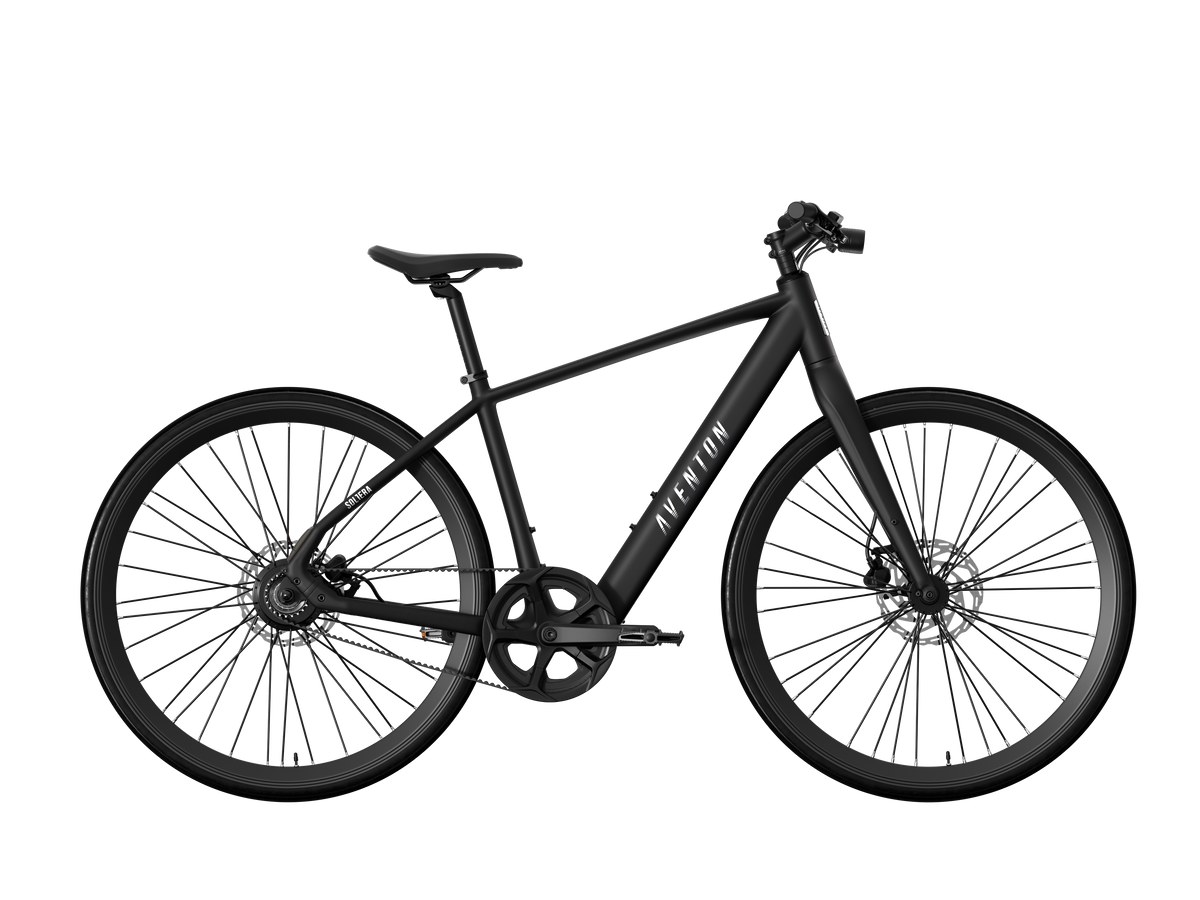
    The Aventon Soltera 3 ADV rides better than its spec sheet suggests. At 37 pounds with a Gates carbon belt, a double-sided torque sensor, and four frame sizes, it feels like a bicycle first and an e-bike second, which is exactly what Aventon set out to build. It scores 6.6 because $1,499 buys the least motor, the smallest battery, and the fewest gears in its price bracket, and because the sealed-in battery and single-speed drivetrain rule the bike out for entire categories of buyer.

    Who it’s for

    This bike targets a rider who already likes cycling and wants a light tailwind rather than a motorcycle. Flat to rolling terrain, short urban trips, a garage or ground-floor apartment to park in, and no interest in hauling cargo: that describes the ideal Soltera 3 ADV owner.

    • Fitness-minded commuters. The Class 1 setup with no throttle keeps you pedaling, and the torque sensor rewards effort proportionally instead of surging.
    • Riders who hate maintenance. The belt drive skips lube, rust, chain stretch, and derailleur adjustment completely.
    • People who lift bikes. At 37 pounds, this loads onto a rack or carries up a short flight of stairs in a way a 60-pound e-bike never will.
    • Riders at the extremes of height. Four sizes cover 5’1″ to 6’4″, which most direct-to-consumer brands do not attempt.

    Hill dwellers, apartment residents above the ground floor, and anyone who wants to carry a passenger or a week of groceries should stop reading here and look at the alternatives listed further down.

    Key specs

    Spec Detail
    Motor 36V 250W rear hub, 40 N·m, 500W peak, Class 1 to 20 mph
    Battery 366.8Wh integrated, non-removable, 4A charger, 2.5 to 4 hour recharge
    Claimed range Up to 70 miles; independent testing returned 55.1 mi low assist and 23.7 mi high assist
    Weight / payload 37 lb / 300 lb capacity
    Drivetrain Single speed, Gates Carbon Belt 122T CDN, 60T front, 22T rear
    Brakes / tires Tektro HD-T3020 hydraulic discs, 180mm rotors; Kenda 700x38C
    Sensing / display Double-sided bottom bracket torque sensor, Aventon BC147 display, app control
    Warranty / price 2 years on frame, components, and battery; $1,499

    Living with it

    The single gear defines daily use. That 60T front and 22T rear pairing lands the cadence sweet spot right around the 20 mph assist ceiling, so the bike feels natural on flats and pleasant to cruise. Point it uphill and the arithmetic turns against you. Electric Bike Report recorded 2:21 on its hill test, which beats most 250W to 500W city bikes, but the outlet still noted that riders supply real effort on climbs. On a genuinely steep block, you will stand on the pedals and grind. Riders in San Francisco, Seattle, or Pittsburgh should treat that as disqualifying.

    The sealed battery creates the second constraint. You cannot pull the pack out and carry it to an outlet, so charging means bringing the entire bicycle indoors or running a cord to wherever you park. The 37-pound weight softens that problem compared to most e-bikes. It does not solve it for anyone on a third-floor walk-up or in a building that bans e-bikes from units.

    Where the bike delivers, it delivers well. The torque sensor reads pedal pressure from both sides of the bottom bracket and produces assistance that arrives smoothly rather than in steps. Braking measured 21 feet 7 inches, better than the category average. Integrated lights and turn signals come standard, which is a real safety win at this price. The belt runs silently and stays clean.

    The gaps are equally clear. No fenders. No rack. No throttle. No brake light function, and no ACU smart security module that other Aventon models carry. You will spend money to make this a commuter.

    Cost of ownership

    Running costs are the strongest part of the value case. A Gates carbon belt commonly lasts 10,000 miles or more and needs no lubricant, no cleaning solvent, and no chain replacements. Skipping derailleur adjustment, cable replacement, and cassette wear removes most of the recurring bicycle maintenance bill.

    • Accessories to budget: fenders and a rear rack add roughly $150 to $220 depending on whether you buy Aventon parts or aftermarket.
    • Belt and sprocket: replacement belts run $60 to $90 and sprockets $40 to $70, but the intervals are measured in years.
    • Battery service: because the pack is integrated, a future replacement is a shop job rather than a swap, which adds labor to the cost.
    • Support: Aventon sells through hundreds of physical dealers, so warranty work and tune-ups happen locally. That advantage is worth real money against direct-only brands.

    How it compares

    The value problem shows up immediately. The Velotric Fold 1 Plus costs the same $1,499 and brings a 750W motor, 75 N·m, a 624Wh battery, and a 450-pound payload. It weighs 63 pounds and rides nothing like the Soltera, yet it delivers roughly 70 percent more energy and triple the peak power for identical money.

    The Velotric Breeze 1 sits closer in spirit, weighing 48 pounds with a 750W hub motor and a 705Wh pack, and it also arrives without fenders or a rack. It offers more range and more power, and it gives up the belt drive and the last 11 pounds of weight savings.

    Anyone whose real requirement is carrying things should look at the Aventon Abound LR at $1,999. Same brand, same dealer network, 733Wh battery, 440-pound capacity, 4G GPS tracking, and 8 speeds. The extra $500 buys a fundamentally more capable machine.

    The Soltera 3 ADV wins on one axis only: it is the nicest riding bicycle of the group. If that axis matters most to you, the price stops looking unreasonable.

    FAQ

    Can a single-speed e-bike handle hills?

    Moderate rollers, yes. Sustained steep grades will require standing effort, because you cannot gear down and the 40 N·m motor cannot compensate. Buyers in hilly cities should choose a geared bike.

    Can I remove the battery to charge it indoors?

    No. The pack is integrated and accessible only for service. You must bring the bike to the charger or run power to the bike.

    Is 367Wh enough for a daily commute?

    For most riders, yes. Testing showed 55.1 miles in low assist and 23.7 miles at high assist, so a round trip under 20 miles is comfortable. Long weekend rides at full power will leave you pedaling home.

    Bottom line

    Buy the Soltera 3 ADV if you want the lightest, quietest, lowest-maintenance e-bike available near $1,500, you ride flat or gently rolling terrain, you park at ground level, and you value ride quality over spec-sheet numbers. It is a genuinely charming bicycle, and the belt drive plus dealer support will save you time and money over years of ownership.

    Do not buy it if you live somewhere hilly, if you need to carry the battery upstairs to charge, if you want a throttle or Class 3 speeds, or if you plan to haul cargo or a passenger. Those buyers get far more machine from the Velotric Fold 1 Plus at the same price or the Aventon Abound LR for $500 more.

  • Mammotion LUBA mini AWD

    Mammotion LUBA mini AWD

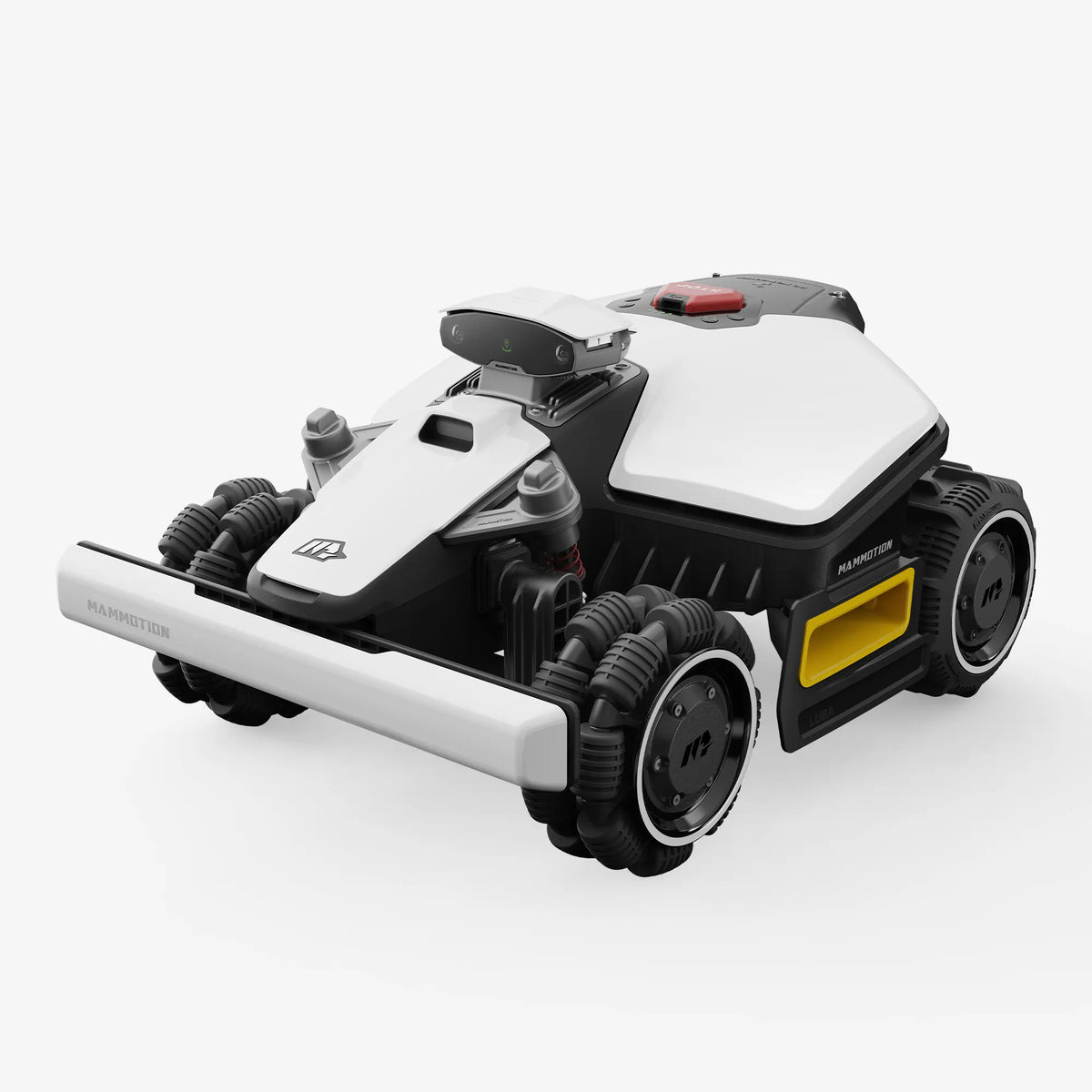
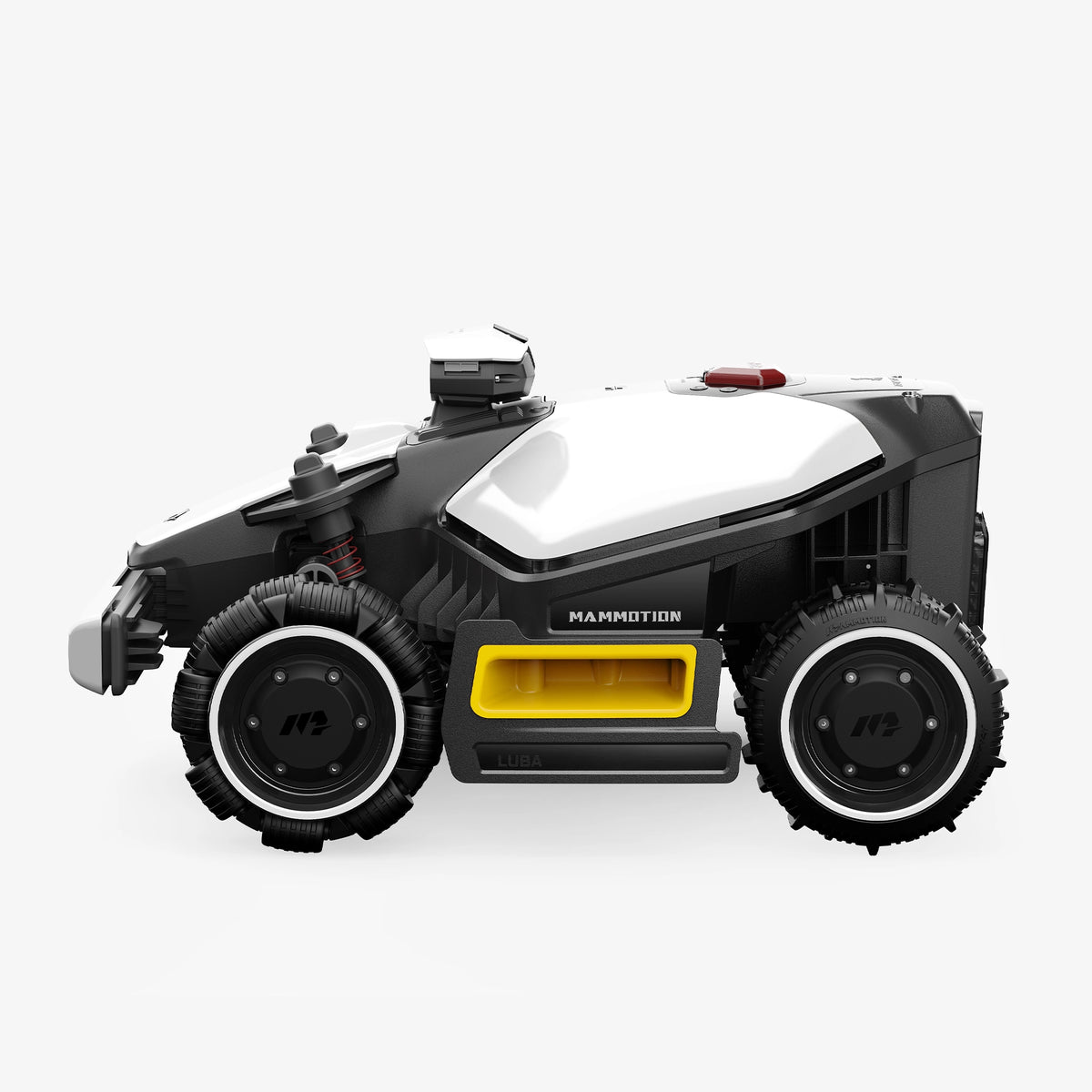
    The Mammotion LUBA mini AWD brings the brand’s flagship all-wheel-drive mower technology down to small-yard sizes and prices: about $1,599 for the 800 variant (up to a quarter acre) and $1,999 for the 1500 (up to about 0.37 acres). With centimeter-level satellite navigation that requires no boundary wire and no RTK base station to install, AI vision obstacle avoidance, and slope ability that embarrasses most rivals, it’s one of the most capable small robot mowers sold in the US — as long as your lawn fits its coverage envelope.

    Who it’s for

    This mower targets owners of small-to-medium suburban lots — roughly 5,000 to 16,000 square feet of actual grass — especially yards that defeat lesser robots: steep banks, drainage ditches, uneven or rutted ground, and lawns split into multiple zones. The AWD system and 80% (38.6-degree) slope rating are the differentiators; front-wheel or rear-wheel-drive competitors typically top out near 40–50% slopes. It also suits people who want zero-installation setup, since Mammotion’s iNavi NetRTK service delivers correction data over the built-in 4G connection instead of a base station antenna you’d have to mount and wire. It’s the wrong choice for lawns much over 0.4 acres, or heavily tree-covered yards where satellite reception is chronically poor.

    Key specs

    Spec LUBA mini AWD 800 / 1500
    Coverage 800: 0.2 acre (max 0.25) — 1500: 0.37 acre working capacity
    Price ~$1,599 (800) / ~$1,999 (1500)
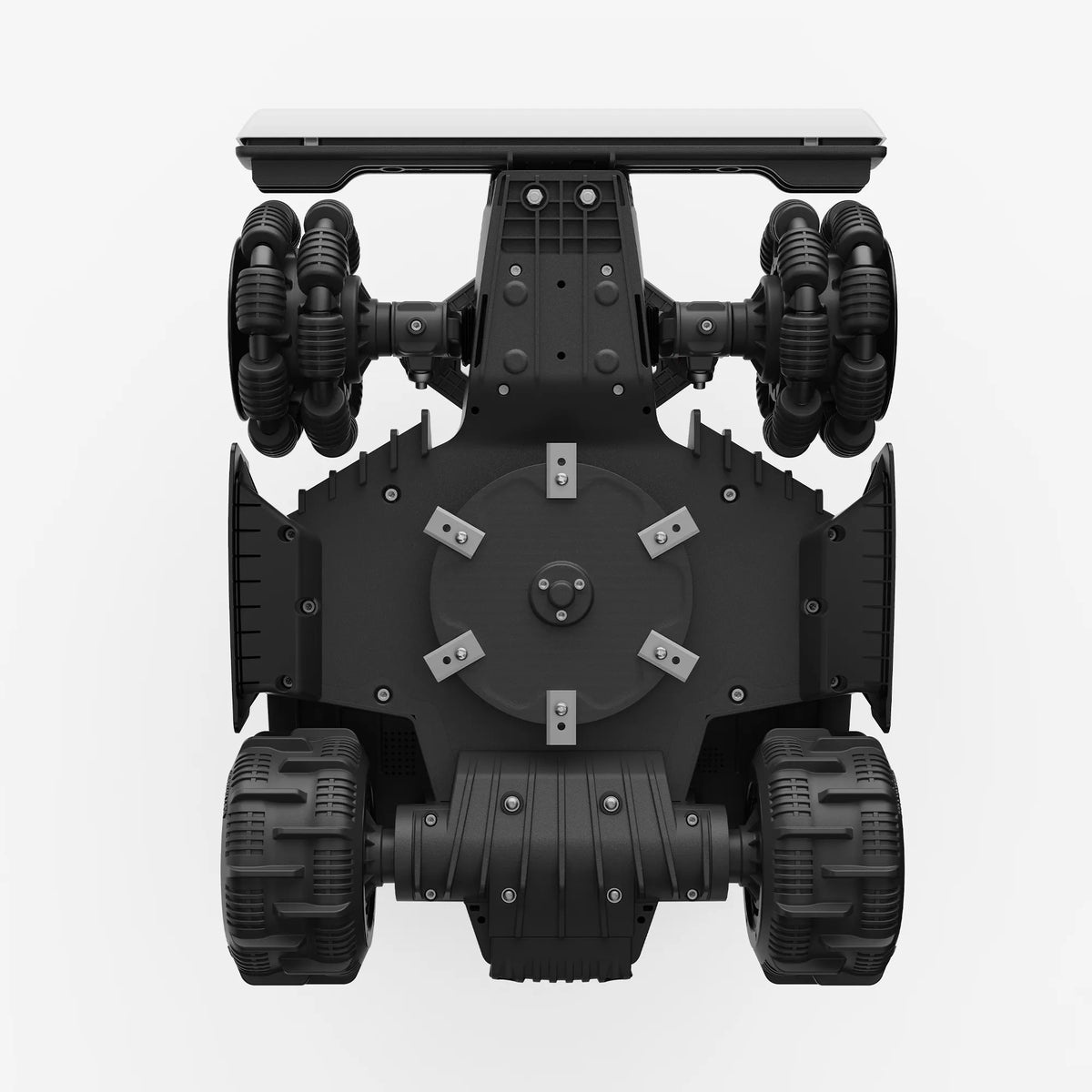
    Cutting width / height 7.9″ (200mm), 6 blades; standard 0.8″–2.6″ or H version 2.2″–4.0″
    Slope ability Up to 80% (38.6°) with all-wheel drive
    Navigation iNavi NetRTK (no base station) + UltraSense AI Vision; up to 20 zones
    Battery / runtime 6.1Ah replaceable pack, up to 160 minutes per charge
    Connectivity Built-in 4G (1 year included), GPS anti-theft, app control, live camera view
    Warranty 3 years, 30-day returns
    Mammotion LUBA mini AWD

    Living with it

    Setup is where the LUBA mini earns its keep first. There’s no perimeter wire to bury and no RTK antenna to mount on your roof: you place the charging dock, drive the mower around your lawn’s edges once with your phone as a virtual remote, and the mower stores the map — up to 20 separate zones, so a front yard, back yard, and side strips can each get their own schedule and cutting height. Mammotion includes its NetRTK correction service for the life of the product.

    In operation, the mower cuts in clean, systematic parallel lines rather than the random bounce pattern of wire-guided robots, and its UltraSense AI Vision handles the messy reality of a lived-in yard — toys, pets, garden hoses — by steering around obstacles instead of bumping into them. When trees or eaves block satellite signal, vision-based positioning keeps it on track rather than stranding it. Edge-cutting mode runs the deck along borders to reduce string-trimmer duty, though like every robot mower, it won’t eliminate touch-up entirely against fences and walls.

    Two practical notes. First, pick your variant carefully: the standard model cuts 0.8″–2.6″, suited to warm-season grasses kept short, while the H version’s 2.2″–4.0″ range matches the taller cut most US cool-season lawns (fescue, bluegrass) actually need. Second, the app is central to everything — scheduling, no-go zones, rain behavior, live camera streaming, and GPS anti-theft alerts all live there, and the built-in 4G means those features work even when the mower is out of Wi-Fi range.

    Cost of ownership

    Beyond the purchase price, running costs are low but not zero. The pivoting razor blades are consumables — expect to replace them every one to two months in season, at a few dollars per set. Electricity is negligible. The built-in 4G and iNavi RTK service are free for the first year; after that, continued cellular connectivity carries a modest annual fee (the RTK positioning service itself is free for life), while Wi-Fi and Bluetooth control remain free. The replaceable battery design matters for longevity: when the pack fades after several seasons, you swap it rather than retire the mower. Mammotion’s 3-year warranty is longer than most of the category and meaningfully de-risks a $1,600–2,000 purchase. Against a $200/month lawn service, either variant pays for itself within a single season.

    How it compares

    Within Mammotion’s own range, the step up is the Mammotion LUBA 2 AWD 10000X, which shares the AWD architecture and slope ability but scales to multi-acre properties with a bigger battery and wider cut — the right call if your lot exceeds half an acre, at a substantially higher price. The mini is essentially that flagship’s capability shrunk to small-yard economics.

    Against outside rivals: the Segway Navimow i110N costs several hundred dollars less and offers similar wire-free vision-plus-GPS navigation, but its two-wheel drive limits it to much gentler slopes and it’s less sure-footed on rough ground. Traditional wire-based options like Husqvarna’s Automower line remain reliable, but boundary-wire installation costs time or money up front, and moving or reshaping zones later means re-burying wire — exactly the friction the LUBA mini’s virtual mapping eliminates. For flat, simple, open lawns the cheaper rivals are rational; the LUBA mini’s premium buys terrain capability.

    Mammotion LUBA mini AWD

    FAQ

    What’s the difference between the LUBA mini AWD 800 and 1500?

    Coverage capacity and price. The 800 (~$1,599) is rated for 0.2 acres with a 0.25-acre maximum; the 1500 (~$1,999) handles up to about 0.37 acres. Slope ability, cutting system, navigation, and smart features are identical. Both come in standard (0.8″–2.6″) and H (2.2″–4.0″) cutting-height versions.

    Does the LUBA mini AWD need a boundary wire or base station?

    Neither. It uses Mammotion’s iNavi NetRTK service — centimeter-level satellite positioning delivered over the built-in 4G connection — plus AI vision. You map the lawn from the app in minutes, with no wire to bury and no antenna to install.

    Can it really handle steep hills?

    Its all-wheel drive is rated for slopes up to 80% (38.6 degrees), among the highest ratings of any consumer robot mower and roughly double what typical two-wheel-drive rivals manage. Traction on wet grass still deserves common-sense caution on the steepest sections.

    Bottom line

    The LUBA mini AWD delivers flagship robot-mower technology — wireless RTK mapping, AI vision, AWD, serious slope ability — at small-yard prices, backed by an unusually long 3-year warranty. Buy it if your quarter-to-third-acre lawn has slopes, rough ground, or multiple zones that would defeat cheaper robots. Skip it if your lawn is bigger than its ratings (step up to the LUBA 2 AWD 10000X), or if your yard is small, flat, and simple — in that case a cheaper two-wheel-drive rival will cut the same grass for less.

  • Velotric Fold 1 Plus

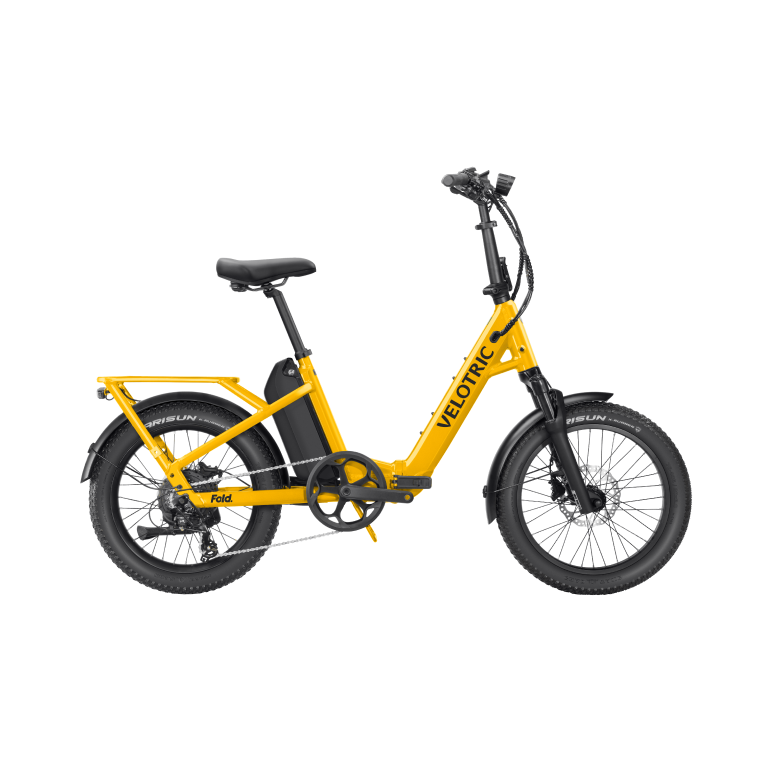
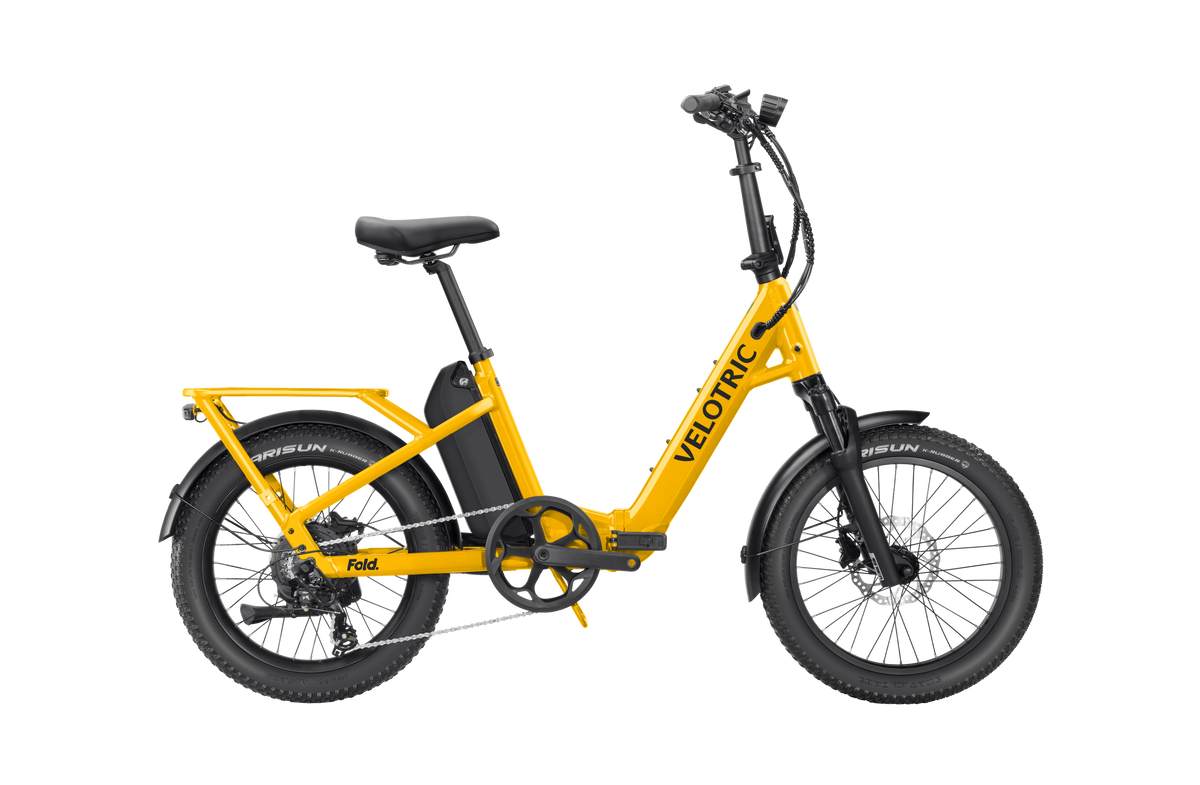
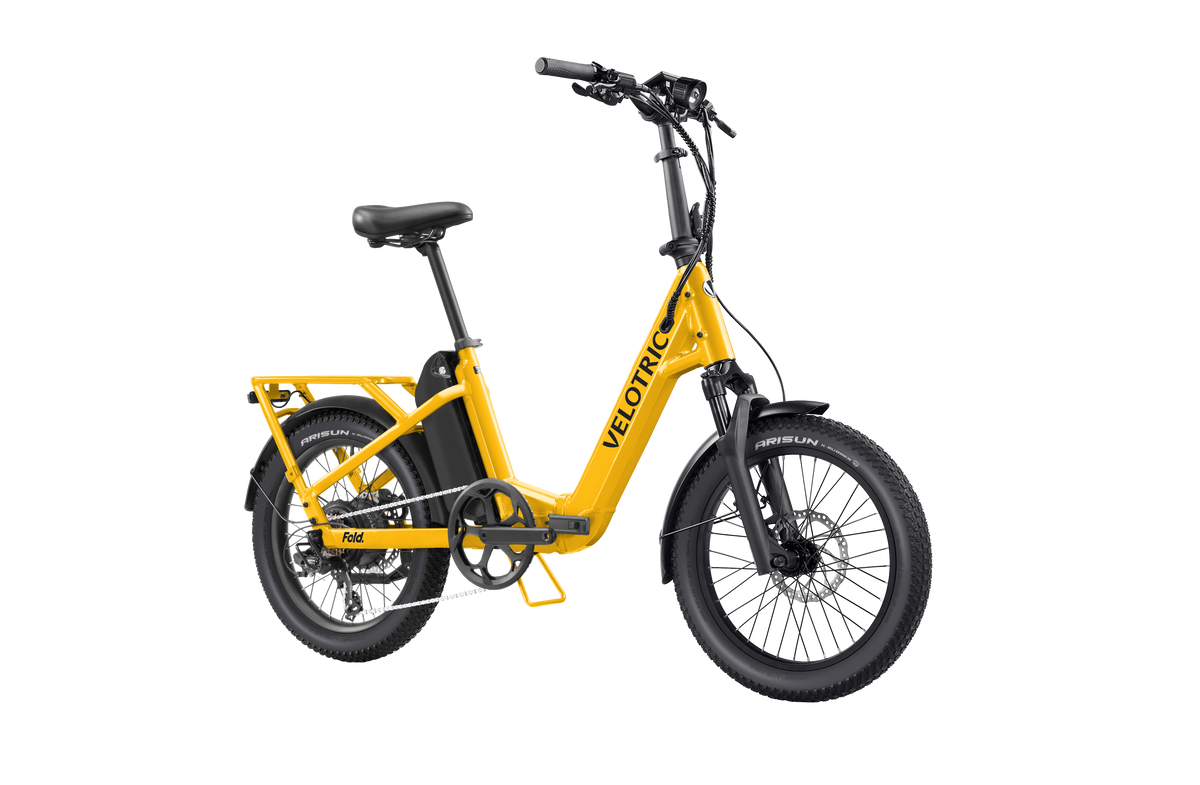
    Velotric Fold 1 Plus

    Most folding e-bikes ask you to accept a worse ride in exchange for a smaller footprint. The Velotric Fold 1 Plus, at about $1,499, mostly refuses that bargain: it pairs a 750W motor with a torque sensor, hydraulic brakes, a suspension fork, and a 450-pound payload rating — full-size commuter hardware on a frame that folds in half. The catch is weight: at over 60 pounds, this is a folder you roll into an RV bay or trunk, not one you carry up three flights of stairs.

    Who it’s for

    The Fold 1 Plus is built for people who need a capable bike that stores small: RV and boat owners, apartment dwellers with tight storage, and commuters who drive part of the way and ride the rest. Its huge fit range — Velotric says riders from 4’9″ to 6’5″, thanks to an adjustable stem and long seatpost — makes it a genuinely shareable household bike, and the 450-pound total payload (including a 120-pound-rated rear rack) accommodates bigger riders and real cargo. It is not the right pick for train commuters who must carry their bike daily, or anyone who needs a sub-40-pound folder.

    Key specs

    Spec Velotric Fold 1 Plus
    Motor 750W rear hub, 75 Nm torque
    Battery 48V, 13Ah / 624Wh, UL 2271 certified, IPX7
    Claimed range Up to 55 miles per charge
    Speed / class Configurable Class 1/2/3; up to 28 mph, throttle included
    Sensor SensorSwap: torque or cadence assist, rider-selectable
    Drivetrain / brakes Shimano 7-speed (52T, 11-28T), hydraulic discs
    Wheels / suspension 20″ x 3.0″ puncture-resistant tires, 60mm suspension fork
    Weight / folded size ~63 lbs (67+ on some test scales); 37.8″ x 19.7″ x 33.5″ folded
    Velotric Fold 1 Plus

    Living with it

    The defining feature is SensorSwap. Most e-bikes commit to either a torque sensor (natural, bike-like assist that responds to pedal pressure) or a cadence sensor (easier, moped-like power whenever the pedals turn). The Fold 1 Plus lets you toggle between them, which turns out to be more than a gimmick: torque mode for engaging fitness rides, cadence mode when you’re tired, hauling groceries, or facing a headwind. Combined with the 75 Nm motor — more torque than many full-size commuters — hills that stall cheaper folders barely register.

    Ride quality is where this bike separates itself from the folding pack. The 20″ x 3.0″ tires put a large air cushion under you, the 60mm suspension fork with substantial 34mm stanchions takes the edge off broken pavement, and the geometry accommodates tall riders without the cramped, twitchy feel small-wheel bikes are known for. The 3.5″ color display is bright and legible, and the electronics package is unusually complete: turn signals, brake-light function, a 130-lux adjustable headlight, cruise control, over-the-air updates, and Apple Find My integration hidden in the frame for theft recovery.

    The compromises are mass and bulk. Somewhere between 63 and 67 pounds, folding it is easy but lifting it is not — plan on rolling it, or lifting with two people into a truck bed. Folded dimensions of roughly 38″ x 20″ x 34″ fit a car trunk or under an RV dinette, but this is no under-the-desk Brompton. One more quibble: the assist system offers many power levels, which gives fine control but can overwhelm first-time e-bikers.

    Cost of ownership

    At $1,499, the Fold 1 Plus costs a few hundred dollars more than budget folders, and the extra money shows up in components that reduce long-run costs: hydraulic brakes (less frequent adjustment than mechanical), puncture-resistant tires, an IPX7 water-resistance rating, and a UL 2271-certified battery — increasingly a requirement for apartment buildings and insurers, and a meaningful fire-safety credential. Velotric’s two-year warranty beats the one-year coverage typical of the category. Expect standard consumables — brake pads, a 7-speed chain, tires — all inexpensive and widely available. Charging the 624Wh pack costs under a dime; there are no subscription fees, and Find My theft tracking is free.

    How it compares

    Within Velotric’s own lineup, the Velotric Breeze 1 delivers a plusher, more relaxed ride for similar money if you don’t actually need the fold — full-size wheels simply ride better. If your riding is sand, snow, or rough trails rather than pavement, the Velotric Nomad 2X is the fat-tire sibling with far more off-road capability, again at the cost of any portability. And if the reason you want a folder is hauling capability in a small package, compare the Aventon Abound LR, a compact cargo bike that carries more, though it doesn’t fold.

    Against market rivals: the Lectric XP4 750 is the value king of folding e-bikes at roughly $1,000, but the Fold 1 Plus answers with a bigger battery, torque-sensor option, better suspension, and stronger fit range. The Rad Power RadExpand 5 Plus costs about the same as the Velotric yet uses a smaller battery and lacks SensorSwap. Spec for spec, the Fold 1 Plus is the most complete folder near $1,500.

    Velotric Fold 1 Plus

    FAQ

    How small does the Velotric Fold 1 Plus get when folded?

    About 37.8″ long, 19.7″ wide, and 33.5″ tall — compact enough for most car trunks, RV storage bays, and closets, though at 63+ pounds you’ll want to roll rather than carry it.

    Is the Fold 1 Plus battery UL certified?

    Yes. The 48V, 624Wh battery is certified to UL 2271 and rated IPX7 for water resistance, and Velotric covers it under the bike’s two-year warranty.

    Can tall riders fit on a 20-inch folding bike?

    This one, yes. The adjustable stem and long seatpost give it a stated fit range of 4’9″ to 6’5″, and independent reviewers have specifically praised how well it accommodates taller riders.

    Bottom line

    The Fold 1 Plus proves a folding e-bike doesn’t have to ride like a compromise: strong motor, switchable assist feel, real suspension, safety certifications, and a payload rating that welcomes nearly everyone. Buy it if you need serious everyday capability that stows in a trunk, RV, or small apartment. Skip it if you must carry your bike regularly — its weight is the one place the full-size ambition works against it — or if a basic $1,000 folder covers your short-hop needs.